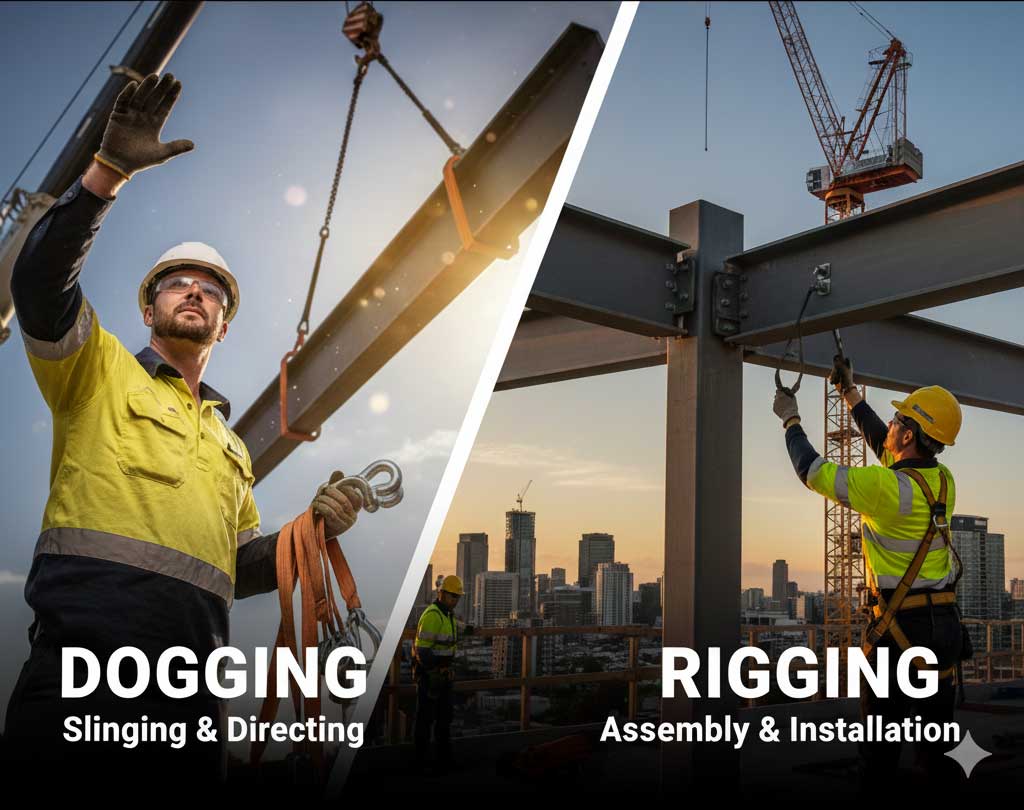
If you are already working as a dogger and are thinking about taking the next step in your construction, lifting or heavy industry career, you may be wondering: can a dogger become a rigger? In Australia, dogging and rigging are closely connected areas of high-risk work, and obtaining a Basic Rigging (RB) licence can expand the type of work you are authorised to perform.
The important point is that basic rigging builds on dogging rather than replacing it. A Basic Rigging licence includes the scope of dogging work and adds specific rigging activities such as structural steel erection, certain hoists, precast concrete placement, safety nets and static lines, and other approved basic rigging tasks.
For workers who want to progress from load preparation and crane signalling into broader rigging responsibilities, the pathway from Dogging (DG) to Basic Rigging (RB) is therefore an important career progression to understand.
Can a Dogger Become a Rigger?
Yes. A worker who holds a Dogging (DG) High Risk Work Licence can progress to Basic Rigging (RB) by completing the required training and assessment.
In fact, dogging is part of the licensing hierarchy for basic rigging. Queensland’s WorkSafe guidance states that a Basic Rigging licence encompasses the requirements for a dogging licence, while SafeWork NSW describes RB as including dogging work as well as a defined range of basic rigging activities.
This means the career path is not usually about abandoning dogging and starting from zero. Instead, your dogging knowledge provides an important foundation for learning the additional skills required for basic rigging.
What Is the Difference Between a Dogger and a Rigger?
Dogging and rigging both involve lifting operations, but the responsibilities are different.
A dogger uses slinging techniques, selects and inspects suitable lifting gear and may direct a crane or plant operator when the load is outside the operator’s view. The work requires judgement about factors such as the load, its mass, centre of gravity, lifting equipment and slinging method.
A basic rigger can perform dogging work but also carries out additional rigging activities involving the movement, placement or securing of loads, plant, equipment and structural components.
| Dogging (DG) | Basic Rigging (RB) |
|---|---|
| Load assessment and slinging | Includes dogging work |
| Selection and inspection of lifting gear | Structural steel erection |
| Directing crane or plant movements in applicable situations | Specified hoist work |
| Applying slinging techniques | Placement of precast concrete members |
| Communication during lifting operations | Safety nets and static lines |
| Perimeter safety screens and shutters | |
| Cantilevered crane loading platforms |
The exact scope of work is determined by the relevant high-risk work licence class and applicable regulations. Basic rigging does not automatically authorise every type of rigging operation. Intermediate and Advanced Rigging cover additional activities.
Do You Need a Dogging Licence Before Getting a Basic Rigging Licence?
For the basic rigging pathway, dogging is the foundation. The licensing requirements generally require the applicant to already hold, or have been assessed for, the dogging requirements before obtaining Basic Rigging.
For example, WorkSafe Queensland states that an applicant for Basic Rigging must hold, or have previously passed assessment for, a Dogging licence.
This is why training pathways commonly combine Dogging and Basic Rigging. A combined course allows a learner to complete the foundational dogging requirements and then progress into the basic rigging requirements in a structured training program.
If you are unsure whether you should start with dogging or take a combined pathway, our guide Dogging vs Rigging: Which Licence Should You Get First? explains the relationship between the two licences in more detail.
What Does a Basic Rigger Actually Do?
The work of a basic rigger extends beyond simply attaching a load to a crane.
Depending on the specific job and the scope of the licence, basic rigging can involve preparing lifting equipment, positioning or securing loads, erecting structural steel, working with certain hoists, positioning precast concrete components and installing specified safety systems.
SafeWork NSW lists the following activities within Basic Rigging: movement of plant and equipment, structural steel erection, specified hoists including mast climbing hoists, precast concrete members, safety nets and static lines, perimeter safety screens and shutters, and cantilevered crane loading platforms.
This broader scope is one reason workers with dogging experience may consider basic rigging as their next qualification.
What Skills Does a Dogger Already Have That Help With Rigging?
Dogging provides several skills that are directly relevant to rigging.
- Load assessment: understanding the characteristics, weight and centre of gravity of loads.
- Lifting gear: identifying appropriate slings, chains, shackles and other equipment and checking their condition.
- Slinging techniques: understanding how loads should be safely attached for lifting.
- Communication: communicating clearly with crane and plant operators.
- Lift planning: identifying hazards and considering the safest way to conduct lifting operations.
- Site safety: understanding exclusion zones, equipment limitations and workplace procedures.
These fundamentals provide a useful base when learning the additional practical requirements of basic rigging.
What Jobs Can You Get With a Dogging and Basic Rigging Licence?
Holding both DG and RB qualifications can allow a worker to pursue roles involving a broader range of lifting and rigging activities, depending on the employer, project and specific duties.
Potential work environments include:
- Commercial and residential construction
- Structural steel projects
- Infrastructure construction
- Precast concrete installation
- Industrial construction
- Heavy lifting operations
- Plant and equipment installation
- Projects involving approved hoist and rigging activities
The qualification itself does not guarantee employment or a particular job title. Employers may also require site experience, additional training, medical or site-specific requirements and other competencies depending on the position.
Can a Basic Rigger Progress to Intermediate and Advanced Rigging?
Yes. Basic Rigging is one stage in the Australian dogging and rigging licensing hierarchy.
The recognised classes progress through:
- Dogging (DG)
- Basic Rigging (RB)
- Intermediate Rigging (RI)
- Advanced Rigging (RA)
Higher rigging classes cover additional types of work. For example, Safe Work Australia identifies cranes, conveyors, dredges and excavators, tilt slabs, certain hoists, demolition and dual lifts within Intermediate Rigging, while Advanced Rigging covers further specialised activities.
Therefore, someone who starts with dogging does not necessarily have to stop at the DG level. The qualification structure provides a pathway toward progressively broader rigging work, subject to the applicable training, assessment and licensing requirements.
Dogging Licence vs Basic Rigging Licence: Which One Should You Get?
The answer depends on the work you want to perform.
If your intended duties primarily involve slinging loads, selecting lifting gear and directing crane movements in situations covered by dogging, a DG licence may be the relevant qualification.
If your career goal involves structural steel erection, specified hoists, precast concrete placement or other work within the Basic Rigging scope, RB may be the more relevant progression.
For a detailed comparison, read our guide to Dogging vs Rigging Courses in Australia: Understanding the Key Differences.
Can You Complete Dogging and Basic Rigging Together?
Training providers can offer combined Dogging and Basic Rigging programs, allowing learners to complete the requirements for both qualifications through one structured training pathway.
Safety Australia Training’s Basic Level Dogging & Rigging program covers CPCCLDG3001 – Licence to perform dogging and CPCCLRG3001 – Licence to perform rigging basic level. The course covers areas such as lift planning, hazard management, lifting equipment selection and inspection, preparing equipment and work areas, transferring loads and completing lifting operations safely.
A combined pathway can be particularly relevant for someone who already knows they want to work across both dogging and basic rigging activities rather than completing the qualifications as completely separate career steps.
What Is the Career Path From Dogger to Rigger?
A typical progression can be understood as:
| Stage | Career Development |
|---|---|
| 1 | Learn dogging fundamentals and complete the DG requirements |
| 2 | Gain practical experience in lifting and load-handling environments |
| 3 | Complete Basic Rigging training and assessment |
| 4 | Work within the scope of the RB licence and employer requirements |
| 5 | Consider Intermediate or Advanced Rigging as your experience and career goals develop |
The actual pathway varies between workers. Some people enter a combined DG + RB program, while others obtain dogging first and then return for basic rigging after gaining workplace experience.
How Do You Start a Dogging and Basic Rigging Career?
If your goal is to move from dogging into rigging, start by identifying the type of work you want to perform and checking the licensing requirements that apply in your state or territory.
Then consider whether a combined Dogging + Basic Rigging program fits your career plan. Training should cover both the theoretical knowledge and practical skills required for the relevant units and licence classes.
After successfully completing the required training and assessment, the high-risk work licence application process is handled through the relevant state or territory regulator. Licence administration can vary by jurisdiction, so candidates should check the requirements of the regulator where they intend to work.
Start Your Dogging and Basic Rigging Training
If you are currently working as a dogger and want to expand your skills into basic rigging, a combined training pathway can give you a structured route from DG to RB.
View the Dogging & Basic Rigging Training Course to check the course details, training locations, requirements and available dates.
Frequently Asked Questions
Can a dogger become a rigger in Australia?
Yes. A worker with a Dogging (DG) qualification can progress to Basic Rigging (RB) by meeting the required training, assessment and licensing requirements.
Does Basic Rigging include dogging?
Yes. Basic Rigging includes dogging work within its licensing scope. SafeWork NSW specifically states that the RB class includes dogging work.
Do I need a dogging licence before basic rigging?
Dogging is a prerequisite within the basic rigging licensing pathway. Depending on the jurisdiction and assessment pathway, you generally need to hold or have been assessed for the dogging requirements before obtaining RB.
What does a basic rigging licence allow you to do?
Basic Rigging allows dogging work plus specified rigging activities such as structural steel erection, particular hoists, precast concrete placement, safety nets and static lines, perimeter safety screens and shutters, and cantilevered crane loading platforms.
Can I progress beyond Basic Rigging?
Yes. The Australian high-risk work licensing structure includes Basic, Intermediate and Advanced Rigging. Higher levels cover additional categories of rigging work and require the relevant training and licensing pathway.
Is combined Dogging and Basic Rigging training available?
Yes. Combined programs are available from training providers, including programs covering CPCCLDG3001 and CPCCLRG3001.