Go to booking
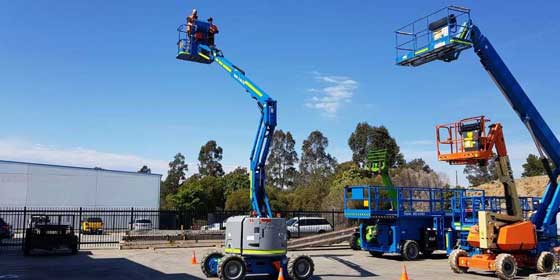
EWP Licence (EWP Ticket)
Course Overview:
Qualification: TLILIC0005 – Licence to operate a boom-type elevating work platform (boom length 11 metres or more)
Duration: 2 or 3 Days (Depending on delivery location)
Assessment Type: Theory and Practical
Prerequisite: N/A
Course Description:
An elevating work platform (EWP) is either a telescoping device, hinged device, articulated device, or a combination of these used to support a platform from which personnel, equipment or materials can be elevated to perform work. This course covers the functions required to operate boom-type elevating work platforms with a boom length of 11 metres or more. Upon successfully completing this course, participants will have the required formal logbook training and assessment results to be eligible to apply for a High-Risk Work (HRW) Licence.
Learning Outcome:
On completion of the course, participants will have gained the following skills and knowledge to:
- Assessing hazards and planning the work
- Conducting routine checks of equipment
- Setting up the elevating work platform
- Operating the elevating work platform
- Shutting down and securing the elevating work platform
Outcome:
A nationally recognised Statement of Attainment and a High-Risk Work Licence (class WP) will be issued through the WHS authority in your jurisdiction. (SafeWork/WorkSafe)
Please select a location from black tabs below to see available dates.
Then select a date to proceed to online enrolment
-
NSWSYDNEY - Homebush West
-
NSWSYDNEY - Sefton
-
NSWSYDNEY - Wetherill Park
-
NSWSYDNEY - Ingleburn
-
VICMELBOURNE - Carrum Downs
-
VICMELBOURNE - Williamstown
-
VICMELBOURNE - Dandenong South
-
WAPerth - Bibra Lake
-
QLDBRISBANE - Salisbury
-
QLDGOLD COAST - Carrara
Loading events…
Loading events…
Loading events…
Loading events…
Loading events…
Loading events…
Loading events…
Loading events…
Loading events…
Loading events…
Are you looking for group booking?
Please fill the form below, and we will get back to you with discounted quote.
The EWP (Elevated Work Platform) training course is designed to teach you how to safely operate elevated work platforms or boom lifts. It’s perfect for those who want to work at heights and ensure they’re following proper safety procedures.
The EWP training typically takes 2 or 3 days to complete, providing you with all the skills and knowledge to operate elevated work platforms safely and confidently.
Our training covers a variety of Elevated Work Platforms (EWPs), including scissor lifts, boom lifts, and vertical mast lifts. Whether you’re working at height on construction sites or in warehouses, our courses ensure you’re equipped with the skills to operate these platforms safely and confidently.
Yes, once you complete the course, you’ll be eligible to apply for your EWP licence! We provide all the training and support you need to get certified and start your career safely.
Your EWP certification is valid for 5 years. After that, you’ll need to renew it to stay compliant and keep operating safely.
To register for the EWP course, simply head over to our website at Safety Australia Training, choose the location and date you’re interested in, and click “Enroll Now.” Fill out the required details, and you’re all set.

EWP Licence Over 11 Metres | Boom Lift Licence Course
Get trained to operate boom-type Elevated Work Platforms (EWPs) with a nationally recognised EWP over 11 metres course from Safety Australia Training. Develop the practical skills and safety knowledge needed to operate boom lifts confidently, prepare for your assessment and pursue your High Risk Work Licence (WP).
Whether you work in construction, telecommunications, electrical services, mining or industrial maintenance, obtaining a boom lift licence can help you qualify for roles that require the safe operation of high-reach boom-type equipment.
Ready to get your EWP ticket? Enquire today about upcoming training dates, course locations and fees.
What Is an EWP Licence Over 11 Metres?
An EWP licence over 11 metres is commonly known as a WP High Risk Work Licence in Australia. It is required to operate a boom-type elevating work platform where the boom length is 11 metres or more, subject to the applicable licensing requirements.
This licence applies to relevant boom-type equipment used to elevate workers and equipment for tasks at height. Examples include:
Boom lifts and telescopic boom lifts
Articulated boom lifts
Cherry pickers
Other qualifying boom-type elevated work platforms
The WP licence is different from general EWP training. Operators of other types of elevated work platforms, including scissor lifts, may not require a WP high-risk work licence, but must still receive appropriate training and instruction for their equipment.
The nationally recognised unit of competency for this course is TLILIC0005 – Licence to operate a boom-type elevating work platform (boom length 11 metres or more).
Successful completion of the required training and assessment provides the relevant Statement of Attainment or assessment evidence needed to apply for the WP High Risk Work Licence through the relevant state or territory regulator.
Why Get a Boom Lift Licence?
A boom lift licence is an important qualification for workers whose jobs involve operating elevated platforms on construction sites, industrial facilities and infrastructure projects.
Completing an EWP over 11 metres course can help you:
Meet licensing requirements: Prepare for work that requires a WP High Risk Work Licence.
Improve workplace safety: Learn to identify hazards and apply safe operating procedures.
Build practical skills: Develop the ability to plan, prepare for and operate boom-type EWPs.
Strengthen your employment prospects: Demonstrate relevant skills to employers recruiting for elevated work platform operations.
Expand your career options: Support your progression into construction, maintenance, telecommunications and other industries where boom lifts are used.
Take the next step towards your WP licence. Contact Safety Australia Training to discuss course availability and enrolment.
Who Should Enrol in the EWP Over 11 Metres Course?
This course is suitable for people seeking the skills and assessment required to operate boom-type EWPs as part of their work.
You may benefit from this training if you are a:
Construction worker or site operator
Telecommunications technician
Electrician or electrical infrastructure worker
Industrial or facilities maintenance worker
Mining or infrastructure worker
Trade professional who needs a WP High Risk Work Licence for their role
New or experienced boom lift operator seeking formal recognition of their competency
Applicants must meet the relevant eligibility and assessment requirements. You should confirm any specific language, literacy, numeracy, identification and enrolment requirements with the training provider before booking.
What Will You Learn in the Boom Lift Licence Course?
The EWP over 11 metres course combines essential safety knowledge with practical operating skills and assessment.
1. EWP Equipment and Operating Principles
Understand the functions and operating characteristics of boom-type elevating work platforms. Learn how equipment configuration, working limits and manufacturer instructions influence safe operation.
2. Workplace Risk Assessment and Hazard Control
Identify potential hazards associated with operating at height, including unstable ground, overhead powerlines, nearby structures, crush points, weather conditions and moving vehicles. Learn how to apply appropriate control measures.
3. Pre-Operational Inspections
Learn to carry out the required equipment checks, test safety devices and identify faults that could affect safe operation. Understand when equipment must be isolated and reported for repair.
4. Safe Boom Lift Operation
Develop practical skills in setting up, positioning, manoeuvring and operating a boom-type EWP. Training and assessment address safe platform movements, stability, operating limits and the use of controls in accordance with the equipment manufacturer’s requirements.
5. Emergency Procedures and Safe Shutdown
Understand relevant emergency procedures and the importance of planning for incidents before work begins. Learn the correct shutdown, securing and post-operation procedures for the equipment.
6. National Assessment Requirements
Demonstrate the knowledge and practical skills required by the relevant unit of competency and the applicable High Risk Work Licence assessment requirements.
Course delivery, practical activities and assessment arrangements should be confirmed with Safety Australia Training before enrolment.
EWP Course Information and Entry Requirements
| Course detail | Information |
|---|---|
| Course name | EWP Licence Over 11 Metres |
| Common name | Boom Lift Licence Course |
| Licence class | WP High Risk Work Licence |
| National unit | TLILIC0005 |
| Training outcome | Relevant Statement of Attainment and assessment evidence, subject to successful completion |
| Minimum age | 18 years for a High Risk Work Licence |
| Identification | Valid identification as required by the provider and regulator |
| USI | Unique Student Identifier, where required |
| PPE | Suitable personal protective equipment as advised by the provider |
| Training locations | Confirm available locations with Safety Australia Training |
| Course fees | Contact the training team for current pricing |
Important: Completing the course does not automatically issue your High Risk Work Licence. Following successful assessment, you must apply to the relevant state or territory regulator within the applicable timeframe and meet its licensing requirements.
How to Get Your WP High Risk Work Licence
Follow these steps to work towards obtaining your boom lift licence in Australia.
Choose your training course. Confirm that the course covers TLILIC0005 and the required WP licence assessment.
Check your eligibility. Review the age, identification, enrolment and assessment requirements.
Complete the training and assessment. Demonstrate the required knowledge and practical operating skills.
Receive your assessment documentation. Successful candidates receive the relevant documentation required for their licensing application.
Apply for your WP licence. Submit your application to the relevant state or territory regulator within the required timeframe.
The WP High Risk Work Licence is generally recognised nationally, although you should confirm any applicable requirements with the relevant regulator.
Career Opportunities After Completing an EWP Course
A boom lift licence may support employment applications for positions that involve elevated access equipment and work at height.
Potential career pathways include:
EWP or boom lift operator
Construction and infrastructure worker
Telecommunications technician
Electrical services worker
Industrial maintenance technician
Facilities maintenance worker
Mining and resources site worker
Employment outcomes depend on the position, employer requirements, relevant experience and any additional qualifications needed for the job. A WP licence does not replace other trade licences, site inductions or job-specific training.
Why Choose Safety Australia Training?
Choosing the right training provider is an important step towards gaining the skills and qualifications required for high-risk work.
Safety Australia Training can help you understand the course requirements, available training locations and enrolment process so you can make an informed decision.
When enquiring about the course, ask about:
Available training and assessment dates
Course fees and what they include
Practical training arrangements
Entry requirements and required documentation
The assessment process and next steps for applying for your WP licence
Our aim is to help participants understand the requirements of boom-type EWP operation and prepare for safe, competent performance in the workplace.
Frequently Asked Questions
Is a boom lift licence the same as an EWP licence over 11 metres?
In common Australian workplace terminology, both usually refer to the WP High Risk Work Licence required for operating a qualifying boom-type EWP with a boom length of 11 metres or more.
Do I need a licence to operate a boom lift?
Yes. A WP High Risk Work Licence is required to operate a boom-type EWP where the boom length is 11 metres or more. Other EWP types have different training and licensing requirements.
Does a scissor lift require a WP licence?
A scissor lift generally does not fall under the WP high-risk licensing class because it is not a qualifying boom-type EWP. However, operators still need appropriate equipment-specific training, instruction and supervision as required for their work.
What is the course code for a boom lift licence?
The relevant national unit of competency is TLILIC0005 – Licence to operate a boom-type elevating work platform (boom length 11 metres or more).
Does completing the course automatically give me a WP licence?
No. Successful completion provides the relevant assessment documentation. You must then apply to the relevant state or territory regulator and meet its requirements to obtain the High Risk Work Licence.
How much does the EWP over 11 metres course cost?
Fees depend on the training provider and course arrangements. Contact Safety Australia Training for current pricing, available dates and locations.
Where can I complete an EWP over 11 metres course?
Contact Safety Australia Training to confirm current course locations, delivery arrangements and upcoming assessment dates.
Enrol in the EWP Over 11 Metres Course
Take the next step towards obtaining your boom lift licence with Safety Australia Training. Build your understanding of safe boom-type EWP operation, prepare for the required assessment and work towards your WP High Risk Work Licence.
Ready to get started? Contact our team today to discuss course fees, available locations and enrolment requirements.