If you are looking to level up your career in the Australian construction, mining, or infrastructure sectors, you’ve likely come across two essential High Risk Work Licences (HRWL): Dogging (DG) and Rigging (RB).
At first glance, the roles look similar—both involve cranes, heavy lifting, and site safety. However, choosing which course to enroll in first is more than just a preference; it’s a matter of regulatory requirements and career progression.
In this guide, we’ll break down the differences, the legal prerequisites, and why Dogging is almost always your starting point.
What is a Dogging Licence (DG)?
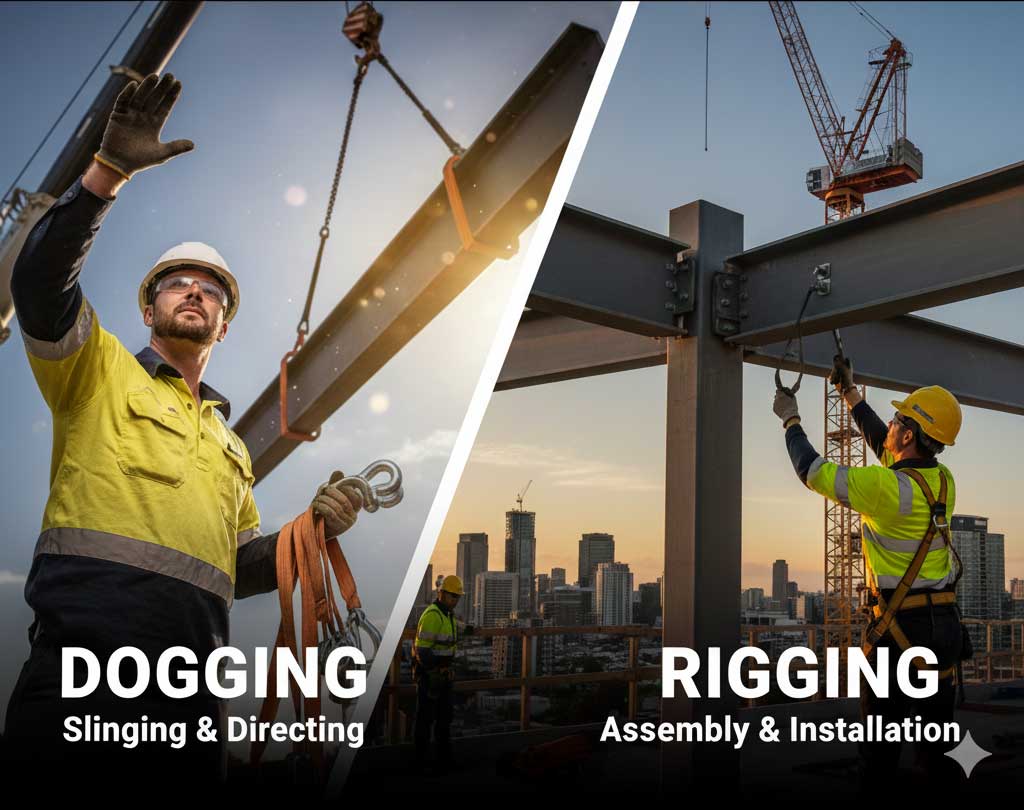
A Dogman is the “eyes and ears” of the crane operator. When a load is “out of view” of the operator, the Dogman uses whistles, hand signals, or radio communication to direct the crane safely.
Key Responsibilities:
- Slinging Techniques: Selecting the right hitch and hardware for the load.
- Load Assessment: Calculating the weight and center of gravity.
- Inspection: Checking slings, chains, and shackles for wear and tear.
- Direction: Guiding the crane operator during the lift.
What is a Rigging Licence (RB, RI, RA)?
Rigging is the next step up. While a Dogman prepares and directs the load, a Rigger is responsible for the actual “mechanical load shifting” and the structural integrity of the lift. Rigging is divided into three levels: Basic, Intermediate, and Advanced.
Basic Rigging (RB) includes everything a Dogman does, PLUS:
- Structural steel erection.
- Installing static lines and safety nets.
- Setting up cantilevered crane loading platforms.
- Placing pre-cast concrete members.
The Verdict: Which One Comes First?
In Australia, the answer is governed by Safe Work Australia standards: You must obtain your Dogging (DG) licence before you can get your Basic Rigging (RB) licence.
The Prerequisite Rule: The unit of competency for Dogging (CPCCLDG3001) is a mandatory prerequisite for Basic Rigging (CPCCLRG3001). You cannot legally be assessed for a rigging ticket without first holding or being assessed in dogging.
Can you do them at the same time?
Yes! Many Registered Training Organisations (RTOs), such as Safety Australia Training, offer combined courses. This is often the most cost-effective and fastest way to get both tickets.
Dogging vs. Rigging: Comparison Table
| Feature | Dogging (DG) | Basic Rigging (RB) |
|---|---|---|
| Primary Focus | Slinging & Directing | Assembly & Installation |
| Prerequisite | None (Must be 18+) | Dogging (DG) Licence |
| Key Task | Directing crane out of sight | Erecting steel/concrete |
| Average Salary | $80,000 – $110,000 | $90,000 – $130,000+ |
Why the Career Path Matters
Starting with your Dogging licence isn’t just a legal hoop to jump through—it’s foundational safety knowledge. You learn how loads behave, how to calculate mass, and how to communicate in high-pressure environments.
Once you have your DG and RB tickets, your employability in Australia skyrockets. Riggers are currently in high demand for major infrastructure projects across Sydney, Melbourne, and Perth.
How to Get Started
- Check Eligibility: You must be 18 years old and meet basic LLN requirements.
- Find a Reputable RTO: Look for providers on the national list like Safety Australia Training.
- Complete the Training: Dogging typically takes 5 days; combined courses take 8–10 days.
- Lodge with the Regulator: Apply via SafeWork or WorkSafe in your state.
Ready to start your high-risk career? Whether you want to master the art of slinging or build the skyscrapers of tomorrow, it all starts with the right ticket.