In the Australian construction and telecommunications industries, “Working at Heights” is more than just a job description—it is a high-risk activity regulated by strict Safe Work Australia standards. Whether you are a roof plumber, a telecommunications rigger, or a crane operator, holding a nationally recognised Statement of Attainment (typically RIIWHS204E) is essential.
But what do you actually learn during the training? It’s not just about wearing a harness. It’s about mastering the technical skills required to stay alive and keep your team safe. Here are the 5 critical skills you will master in a professional Working at Heights course.
1. Risk Assessment and Hazard Identification
Before any equipment is touched, a worker must be able to “read” the environment. You will learn how to conduct a Job Safety Analysis (JSA) or a Safe Work Method Statement (SWMS) specific to height work.
- What you learn: Identifying “edge” risks, overhead powerlines, weather factors, and structural integrity.
- The Goal: To eliminate the risk of a fall before it even becomes a possibility.
2. Correct Selection and Inspection of PPE
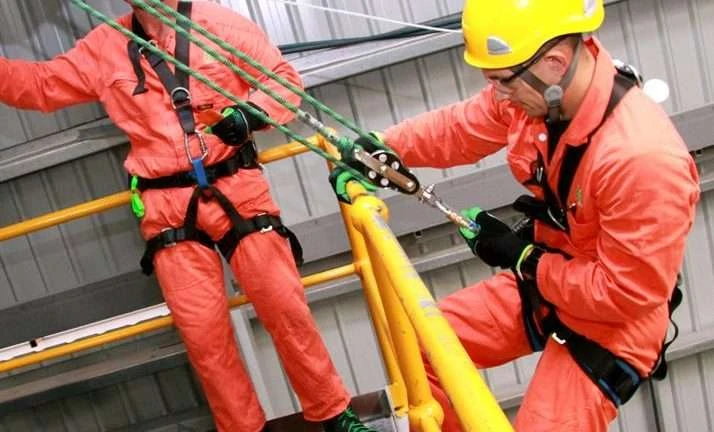
A harness that is poorly fitted or damaged is as dangerous as no harness at all. This skill involves the meticulous inspection of Personal Protective Equipment (PPE).
- What you learn: Checking for wear on webbing, ensuring carabiners are self-locking, and understanding the “A-B-C-D” of fall protection (Anchor, Body Support, Connectors, and Descent).
- The Goal: Ensuring your gear will actually hold you in the event of a slip.
3. Calculating Fall Clearance
One of the most technical skills taught is calculating the Total Fall Clearance Distance. If your lanyard is too long for your working height, you may hit the ground before the fall arrester engages.
- What you learn: Accounting for lanyard length, energy absorber stretch, and the “safety factor” clearance.
- The Goal: Ensuring that if a fall occurs, you remain suspended safely in mid-air.
4. Mastery of Anchor Points and Connectors
Not every bolt or railing is a safe anchor point. In a course provided by an RTO like Safety Australia Training, you learn the physics of force and how different anchors react under load.
- What you learn: Identifying rated vs. non-rated anchors and preventing the “pendulum effect.”
- The Goal: Secure attachment that minimizes the force applied to both the structure and your body.
5. Emergency Procedures and Suspension Trauma Awareness
What happens after a fall? Being suspended in a harness can lead to Suspension Trauma, a life-threatening condition where blood pools in the legs.
- What you learn: Using trauma straps, self-rescue techniques, and implementing a rapid recovery plan.
- The Goal: Preventing secondary injuries or fatalities during the rescue phase.
Comparison: Basic vs. Advanced Height Training
| Skill Level | Focus Area | Common Roles |
|---|---|---|
| Basic Heights | Fall Prevention & PPE | Carpentry, Roofing, Maintenance |
| Tower Rescue | Vertical Recovery & Advanced Rigging | Telecoms, Wind Turbines, Crane Crews |
Is it Worth the Investment? Whether you are an individual looking to increase your employability or an employer ensuring compliance, mastering these five skills is a non-negotiable. Leading providers like Safety Australia Training ensure you go home to your family at the end of every shift.