What Would You Do If an Emergency Happened at Work?
During a workplace emergency, there is often no time to search for instructions or decide who should take charge. A well-prepared emergency response depends on people understanding their responsibilities before an incident occurs.
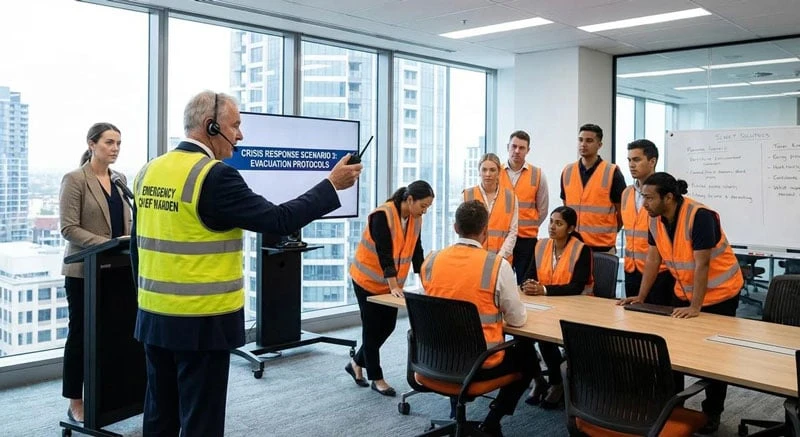
A Chief Warden may need to assess the situation, communicate instructions, coordinate emergency wardens and support evacuation procedures. The decisions made during the first few moments of an emergency can have a significant impact on how effectively people respond.
Without appropriate training, workplace emergency responses can quickly become disorganised. People may not know which evacuation route to use, who is responsible for specific areas or how information should be communicated.
Would you know how to take control and lead your workplace towards a safer response?
Why Every Workplace Needs Effective Emergency Leadership
Emergency response is not simply about sounding an alarm and leaving a building. A coordinated emergency response requires planning, communication and leadership.
In many workplaces, the Emergency Control Organisation includes several people with specific responsibilities. Wardens may be responsible for checking designated areas, assisting with evacuation and reporting information. The Chief Warden provides overall coordination and leadership during the emergency response.
This structure helps create a clear chain of communication and responsibility. Instead of multiple people trying to make different decisions, trained personnel can follow established emergency procedures and work together more effectively.
Effective emergency leadership can help with:
- Coordinating workplace emergency procedures
- Communicating important instructions clearly
- Supporting the orderly evacuation of workers and other occupants
- Coordinating the activities of emergency wardens
- Responding to changing circumstances during an emergency
- Communicating with relevant emergency services when required
- Supporting the review and improvement of emergency procedures
What Does a Chief Warden Do During a Workplace Emergency?
The exact responsibilities of a Chief Warden may vary depending on the workplace, building, emergency procedures and the type of incident. However, the role generally involves coordinating the Emergency Control Organisation and supporting the implementation of emergency response procedures.
1. Taking a Leadership Role
During an emergency, people need clear direction. The Chief Warden helps coordinate the response and provides leadership to other wardens involved in the emergency procedure.
This does not mean acting alone or making decisions outside established emergency procedures. Instead, effective leadership involves understanding the emergency plan, communicating effectively and coordinating the available response resources.
2. Coordinating Emergency Wardens
Emergency wardens may have different responsibilities depending on the workplace. A Chief Warden helps coordinate these responsibilities so that the emergency response is organised and information can be communicated effectively.
3. Supporting Evacuation Procedures
Evacuation can become difficult when people are confused or do not know where to go. A Chief Warden helps coordinate the response according to the workplace emergency plan and supports communication between wardens and other relevant personnel.
4. Communicating During a Crisis
Clear communication is one of the most important elements of an emergency response. Instructions may need to be communicated to wardens, workers, visitors, contractors or emergency services.
Training helps Chief Wardens understand how to communicate information clearly and remain focused when an emergency creates pressure and uncertainty.
5. Supporting Emergency Response Planning
Emergency preparedness does not begin when an alarm sounds. Effective workplaces need emergency procedures that are reviewed, communicated and understood before an incident occurs.
Chief Wardens may play an important role in helping organisations identify emergency response responsibilities and ensure that emergency procedures remain relevant to the workplace.
What Happens When Nobody Knows Who Is in Charge?
One of the biggest challenges during a workplace emergency is confusion. Employees may not know who to follow. Wardens may not know who is coordinating the response. Information may be incomplete or communicated inconsistently.
A trained Chief Warden helps provide a clear leadership structure. When people understand their roles before an emergency happens, they are more likely to respond in an organised way.
This is why Chief Warden training is important for workplaces that rely on an Emergency Control Organisation. The goal is not to predict every possible emergency. The goal is to develop the knowledge and confidence needed to respond appropriately when circumstances change.
Do You Need Chief Warden Training?
If you have been appointed as a Chief Warden, are expected to lead an Emergency Control Organisation or need to develop your workplace emergency response skills, formal training can help you understand the responsibilities associated with the role.
Chief Warden training may be relevant to people working in offices, commercial buildings, industrial workplaces, retail environments, education facilities and other workplaces where emergency response procedures require designated leadership.
It can also be valuable for employers and organisations that want their emergency response teams to have a clearer understanding of their roles and responsibilities.
Before choosing a course, it is important to understand the training requirements that apply to your workplace and the relevant state or territory requirements.
What Is Covered in Chief Warden Training?
A Chief Warden course is designed to help participants understand how to lead and coordinate an Emergency Control Organisation. Depending on the training program, participants may learn about topics such as:
- Emergency response procedures
- The role and responsibilities of a Chief Warden
- Emergency Control Organisation structures
- Communication during emergencies
- Evacuation coordination
- Emergency response planning
- Coordination with emergency wardens
- Workplace emergency situations and response procedures
- Decision-making during emergency situations
- Reviewing emergency response procedures
The exact content and assessment requirements depend on the specific course and training provider.
How Can Chief Warden Training Help Your Career?
Emergency response responsibilities are important in many workplaces. Developing Chief Warden skills can help you take on additional workplace responsibilities and may support career development in areas such as workplace safety, facilities management, security, emergency management and operations.
The role can be particularly relevant to people who already work in positions involving workplace coordination, safety responsibilities or building operations.
If you are considering this training as part of your career development, you can also explore potential job opportunities associated with Chief Warden training in Australia.
Chief Warden vs Fire Warden: What Is the Difference?
The terms Chief Warden and Fire Warden are sometimes used interchangeably, but they can refer to different levels of responsibility within a workplace emergency response structure.
A Fire Warden or Emergency Warden may be responsible for specific areas or tasks during an emergency. A Chief Warden generally has a broader coordination and leadership role, helping manage the overall Emergency Control Organisation.
The exact structure and responsibilities can vary between workplaces. For this reason, organisations should ensure that their emergency response roles are clearly defined and that personnel receive appropriate training for their responsibilities.
What Should You Look for in a Chief Warden Course?
Choosing the right training course is an important decision. Before enrolling, consider whether the course is appropriate for your workplace responsibilities and whether it provides the training outcomes you need.
Consider the following:
- Whether the course is relevant to your role
- Whether the training is nationally recognised where applicable
- Whether the course covers Emergency Control Organisation leadership
- Whether the delivery method suits your schedule
- Whether assessment requirements are clearly explained
- Whether the training provider is appropriately authorised to deliver the course
You can also learn more about the Chief Warden course in Australia before deciding whether this type of training is right for you.
Would You Be Ready to Lead When an Emergency Happens?
Nobody expects a workplace emergency to happen. However, emergency preparedness is about being ready before something goes wrong.
When an emergency occurs, people may look to trained leaders for direction. The ability to remain focused, communicate clearly and coordinate an emergency response can make an important difference to how a workplace responds.
So, would you know what to do if an emergency happened at work?
If you are ready to develop the skills needed to lead an Emergency Control Organisation and take on the responsibilities of a Chief Warden, explore the available training option below.
Ready to Become a Confident Chief Warden?
Develop the knowledge and skills to lead workplace emergency response procedures and coordinate an Emergency Control Organisation.
Explore Chief Warden Training
Frequently Asked Questions About Chief Warden Training
What is a Chief Warden?
A Chief Warden is a person responsible for helping lead and coordinate an Emergency Control Organisation during workplace emergency situations. Their responsibilities may include coordinating wardens, supporting evacuation procedures and communicating emergency information.
Why is Chief Warden training important?
Chief Warden training helps participants understand the responsibilities associated with leading an emergency response. It can help develop knowledge of emergency procedures, communication, coordination and leadership.
Is Chief Warden training the same as Fire Warden training?
Not necessarily. A Chief Warden generally has a broader leadership and coordination role, while a Fire Warden or Emergency Warden may be responsible for specific areas or tasks. The exact responsibilities depend on the workplace emergency response structure.
Who should complete Chief Warden training?
The training may be suitable for people appointed to lead an Emergency Control Organisation or those who have Chief Warden responsibilities within their workplace. Employers may also arrange training for staff who are expected to coordinate emergency response procedures.
What can I do after completing Chief Warden training?
Depending on your experience and other qualifications, Chief Warden training may support workplace responsibilities and career opportunities related to emergency response, workplace safety, facilities management, security and operations.
How do I enrol in Chief Warden training?
To explore the available Chief Warden training option and find out more about the course, visit the Chief Warden training page.