Quick Answer: What Does Dogging Mean?
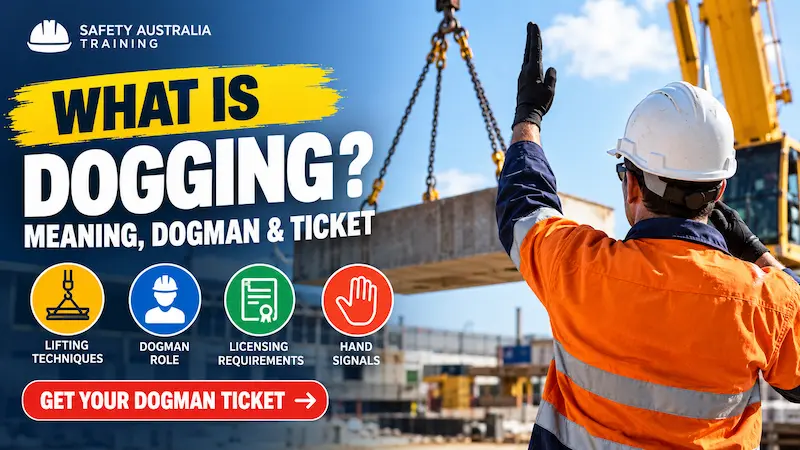
Dogging means using judgement to select and apply appropriate slinging techniques for lifting loads and, where required, directing a crane or hoist operator when the load is outside the operator’s view.
- Dogging meaning: Preparing and managing loads for lifting using suitable slinging techniques.
- Dogman meaning: A worker who performs dogging work.
- Dogman Ticket: The common industry name for a Licence to Perform Dogging (Class DG).
- Industries: Construction, infrastructure, mining, transport and industrial workplaces.
- How to qualify: Complete the required training and assessment, then apply to the relevant state or territory regulator.
Want to get qualified? Explore the Licence to Perform Dogging course at Safety Australia Training.
What Is Dogging Work in Construction?
Dogging work supports the safe movement of loads during lifting operations. It requires workers to assess the load, select suitable lifting equipment and use appropriate techniques to connect the load to a crane or hoist.
Depending on the task, dogging responsibilities may include:
- Assessing the load’s approximate weight, shape, dimensions and centre of gravity.
- Selecting suitable slings, chains, shackles and other lifting gear.
- Checking that lifting equipment is appropriate for the load and lifting configuration.
- Applying appropriate slinging techniques.
- Identifying hazards that could affect the load, equipment or nearby workers.
- Directing a crane or hoist operator when the load is outside the operator’s view.
- Communicating clearly with the lifting team throughout the operation.
Dogging requires more than attaching a load to a hook. Workers need to understand load stability, equipment limitations, workplace procedures and the risks associated with suspended loads.
Start Your Training Journey
Ready to Get Your Dogman Ticket?
Build the skills needed for dogging work and take the next step towards your High Risk Work Licence. Check course requirements, training locations and upcoming dates before enrolling.
Review current availability and applicable licensing requirements before booking.
What Does a Dogman Do?
A Dogman, also known as a Dogger, helps ensure that loads are prepared, attached and moved safely during lifting operations. Responsibilities vary according to the worksite, equipment, load and lifting plan.
1. Assessing Loads
A Dogman considers the load’s characteristics, including its estimated weight, shape, balance and centre of gravity. These factors help determine a suitable lifting arrangement.
2. Selecting Lifting Gear
The worker selects appropriate lifting equipment, such as chains, wire-rope slings, synthetic slings and shackles, according to the load and lifting requirements.
3. Inspecting Equipment
Lifting gear must be checked for visible damage, wear, deformation and other defects. Equipment that is unsafe or unsuitable must not be used.
4. Applying Slinging Techniques
The Dogman uses appropriate techniques to connect the load securely and help maintain stability during lifting.
5. Directing Crane Movements
When the crane operator cannot see the load clearly, the Dogman may provide directions using agreed hand signals, radio communication or other approved site procedures.
6. Managing Lifting Hazards
The Dogman must remain alert to hazards, maintain effective communication and follow workplace procedures throughout the lift.
Dogging Meaning vs Dogman Meaning
Although the terms are closely related, they refer to different things.
| Term | Meaning |
|---|---|
| Dogging | Work involving judgement in selecting and applying slinging techniques and directing relevant crane or hoist movements. |
| Dogman | The worker who performs dogging work. |
| Dogger | Another commonly used term for a Dogman. |
| Dogman Ticket | The common industry name for the Licence to Perform Dogging (Class DG). |
| Dogging Licence | The high-risk work licence relevant to regulated dogging activities. |
| Rigging | A category of specified work that can include structural steel erection, hoists and complex lifting or installation tasks. |
In everyday Australian construction language, people may use “Dogman Ticket”, “dogging ticket” and “dogging licence” interchangeably. The formal licence is the Licence to Perform Dogging.
What Is a Dogman Ticket in Australia?
A Dogman Ticket is the commonly used name for the Australian High Risk Work Licence for dogging, Class DG. It demonstrates that a worker has met the required competency and licensing requirements for the relevant high-risk work.
Dogging is included in Australia’s high-risk work licensing framework. Workers must hold the appropriate licence before undertaking regulated dogging work, subject to applicable exceptions, such as approved training under the required supervision.
How Do You Get a Dogman Ticket?
- Choose a suitable training provider. Confirm that the provider is authorised to deliver the required nationally recognised training and assessment.
- Check the entry requirements. Ask about identification, eligibility, language or literacy requirements and other relevant conditions.
- Complete training. Learn about load assessment, lifting gear, slinging techniques, hazard management and communication.
- Pass the required assessment. Demonstrate the required knowledge and practical competency.
- Apply for the licence. Follow the application process and deadlines set by your state or territory workplace health and safety regulator.
Safe Work Australia develops national policy and model laws but does not issue individual high-risk work licences. Licensing is administered by the relevant state or territory regulator. Read the official high-risk work licence guidance.
Start Your Training Journey
Ready to Get Your Dogman Ticket?
Build the skills needed for dogging work and take the next step towards your High Risk Work Licence. Check course requirements, training locations and upcoming dates before enrolling.
Review current availability and applicable licensing requirements before booking.
What Are Dogging Hand Signals in Australia?
Dogging hand signals help a Dogman communicate with a crane operator during lifting operations, particularly when the operator cannot see the load or surrounding work area clearly.
Signals must be understood by the lifting team and agreed upon before work begins. The team should also establish communication procedures for situations where visibility is limited or radio communication is required.
- Hoist or raise: Communicating that the load should be raised.
- Lower: Directing the load downwards.
- Stop: Telling the operator to stop the relevant movement.
- Emergency stop: Signalling that an immediate stop is required.
- Slew or travel: Directing the relevant crane movement where applicable.
- Slow or controlled movement: Requesting careful movement when required by the lift plan and agreed procedures.
Important safety note:
These descriptions explain the purpose of common signal categories; they are not a substitute for standardised signals and procedures required for a specific crane and worksite. If a signal is unclear, communication is lost or an unsafe condition develops, the lifting operation should be stopped in accordance with site procedures until it is safe to continue.
Why Are Dogging Hand Signals Important?
Clear signals help prevent misunderstandings, unexpected load movements and collisions. A Dogman must use the communication method established for the job and ensure that the operator can identify the instructions.
Dogging vs Rigging: What Is the Difference?
Dogging and rigging are related but distinct types of high-risk work. Dogging focuses on judgement in selecting and applying slinging techniques and directing relevant lifting movements. Rigging covers specified activities that may involve installing or moving equipment, erecting structural steel and undertaking more complex lifting or installation tasks.
| Feature | Dogging | Rigging |
|---|---|---|
| Main focus | Selecting and applying slinging techniques and directing relevant lifting movements. | Specified lifting, installation and structural tasks. |
| Typical work | Preparing and securing loads for crane lifting. | Structural steel, hoists, precast concrete and other rigging activities. |
| Licence | Class DG. | Applicable rigging class, such as RB, RI or RA. |
| Training pathway | Licence to Perform Dogging. | Rigging training and licensing appropriate to the work. |
Rigging work has different licence requirements depending on the task. Confirm the required licence class before undertaking any activity. For relevant training information, visit the dogging and rigging course information page.
For many people, dogging is a useful starting point for progressing into rigging, crane-related work and other construction roles.
Why Is a Dogging Licence Important?
1. Workplace Safety
Incorrect lifting gear, unstable loads, damaged equipment and poor communication can cause serious incidents. Dogging training helps workers recognise hazards and apply suitable lifting practices.
2. Legal Compliance
Dogging is a high-risk work category in Australia. Workers and employers must understand the licensing requirements that apply to the tasks being performed.
3. Employment Opportunities
A dogging qualification may be relevant to jobs in construction, mining, civil infrastructure, logistics and industrial operations where lifting activities are part of the work.
4. Skills Development
Dogging training helps develop practical knowledge of lifting gear, slinging methods, load characteristics, communication and hazard management.
What Industries Employ Dogmen in Australia?
Dogmen may work in a variety of industries where loads need to be lifted, positioned or moved.
- Construction: Commercial buildings, residential developments and major construction projects.
- Civil infrastructure: Roadworks, bridges and infrastructure construction.
- Mining and resources: Industrial and resource-sector lifting operations.
- Transport and logistics: Loading and unloading heavy or oversized materials.
- Manufacturing: Moving machinery, components and industrial materials.
- Crane and lifting services: Supporting lifting operations using cranes and related equipment.
The duties, experience requirements and additional qualifications differ by role. Employers may also require site inductions, relevant safety training and experience with particular lifting operations.
Is Dogging a Good Career Choice?
Dogging may suit people who prefer practical work, enjoy working as part of a team and can follow safety procedures carefully. The role requires attention to detail, sound judgement, clear communication and an understanding of workplace hazards.
Before choosing this career path, consider:
- Whether you are comfortable working around heavy equipment and suspended loads.
- Whether you can communicate clearly under workplace conditions.
- Whether you can follow lifting plans and site safety procedures.
- Whether local employers are recruiting workers with your experience and qualifications.
- Whether additional licences or site-specific training would improve your employment prospects.
Research local job advertisements and speak with employers to understand the skills and experience expected in your preferred industry.
Frequently Asked Questions About Dogging
What does dogging mean in Australia?
Dogging is high-risk work involving judgement in selecting and applying slinging techniques to lift loads safely. It can also involve directing a crane or hoist operator when the load is outside their view.
What does a Dogman do?
A Dogman assesses loads, selects suitable lifting gear, applies slinging techniques and communicates with crane operators during relevant lifting operations. They also help identify hazards and follow workplace safety procedures.
What is the meaning of a dogging ticket?
A dogging ticket is the common industry name for the Licence to Perform Dogging (Class DG), the high-risk work licence associated with regulated dogging activities in Australia.
Is a Dogman Ticket mandatory in Australia?
Workers generally need the appropriate high-risk work licence before performing regulated dogging work. Specific exceptions may apply, including approved training under the required supervision. Confirm the requirements with the relevant state or territory regulator.
How do I get a dogging licence?
You generally need to complete the required training and assessment with an appropriately authorised training provider and then apply to the relevant state or territory regulator. Check the current requirements before enrolling.
What are dogging hand signals?
Dogging hand signals are agreed visual instructions used to communicate with a crane operator during lifting operations. They may include instructions to raise, lower or stop a load. Workers must follow applicable standard signals and worksite communication procedures.
Can a Dogman operate a crane?
A Dogging Licence does not automatically authorise a worker to operate every type of crane. Crane operation may require a separate high-risk work licence for the specific crane class. Check the current licensing requirements for the equipment and task.
What is the difference between dogging and rigging?
Dogging involves selecting and applying slinging techniques and directing relevant lifting movements. Rigging includes additional specified work such as structural steel erection and installing or moving certain equipment. Different rigging classes apply to different tasks.
How long does it take to get a Dogman Ticket?
The duration depends on the course structure, training provider, learner’s experience and assessment arrangements. Contact the provider for current course dates and duration.
Is a Dogman Ticket recognised across Australia?
High-risk work licences operate within Australia’s national licensing framework, but applications and administration are handled by state and territory regulators. Confirm the licence’s status and applicable requirements with the relevant regulator.
Are Dogman and Dogger the same?
Yes. Dogman and Dogger are commonly used terms for a worker who performs dogging work.
Take the Next Step
Ready to Start Your Dogging Training?
Learn about the training pathway for the Licence to Perform Dogging (Class DG). Review available course locations, dates and entry requirements before booking.
Official Dogging Licence Information
What does dogging mean in Australia?
Dogging is high-risk work involving judgement in selecting and applying slinging techniques to lift loads safely. It can also involve directing a crane or hoist operator when the load is outside their view.
What does a Dogman do?
A Dogman assesses loads, selects suitable lifting gear, applies slinging techniques and communicates with crane operators during relevant lifting operations. They also help identify hazards and follow workplace safety procedures.
What is the meaning of a dogging ticket?
A dogging ticket is the common industry name for the Licence to Perform Dogging (Class DG), the high-risk work licence associated with regulated dogging activities in Australia.
Is a Dogman Ticket mandatory in Australia?
Workers generally need the appropriate high-risk work licence before performing regulated dogging work. Specific exceptions may apply, including approved training under the required supervision. Confirm the requirements with the relevant state or territory regulator.
How do I get a dogging licence?
You generally need to complete the required training and assessment with an appropriately authorised training provider and then apply to the relevant state or territory regulator. Check the current requirements before enrolling.
What are dogging hand signals?
Dogging hand signals are agreed visual instructions used to communicate with a crane operator during lifting operations. They may include instructions to raise, lower or stop a load. Workers must follow applicable standard signals and worksite communication procedures.
Can a Dogman operate a crane?
A Dogging Licence does not automatically authorise a worker to operate every type of crane. Crane operation may require a separate high-risk work licence for the specific crane class. Check the current licensing requirements for the equipment and task.
What is the difference between dogging and rigging?
Dogging involves selecting and applying slinging techniques and directing relevant lifting movements. Rigging includes additional specified work such as structural steel erection and installing or moving certain equipment. Different rigging classes apply to different tasks.
How long does it take to get a Dogman Ticket?
The duration depends on the course structure, training provider, learner’s experience and assessment arrangements. Contact the provider for current course dates and duration.
Is a Dogman Ticket recognised across Australia?
High-risk work licences operate within Australia’s national licensing framework, but applications and administration are handled by state and territory regulators. Confirm the licence’s status and applicable requirements with the relevant regulator.
Are Dogman and Dogger the same?
Yes. Dogman and Dogger are commonly used terms for a worker who performs dogging work.
Take the Next Step
Ready to Start Your Dogging Training?
Learn about the training pathway for the Licence to Perform Dogging (Class DG). Review available course locations, dates and entry requirements before booking.
For current high-risk work licensing information, consult Safe Work Australia’s high-risk work licence guidance and the relevant state or territory workplace health and safety regulator.
Understanding the dogging meaning is the first step towards learning how safe lifting operations are carried out across Australia’s construction and industrial sectors. If you want to develop the skills required for dogging work, review the training and assessment requirements for the Licence to Perform Dogging (Class DG).
View the Licence to Perform Dogging course at Safety Australia Training.