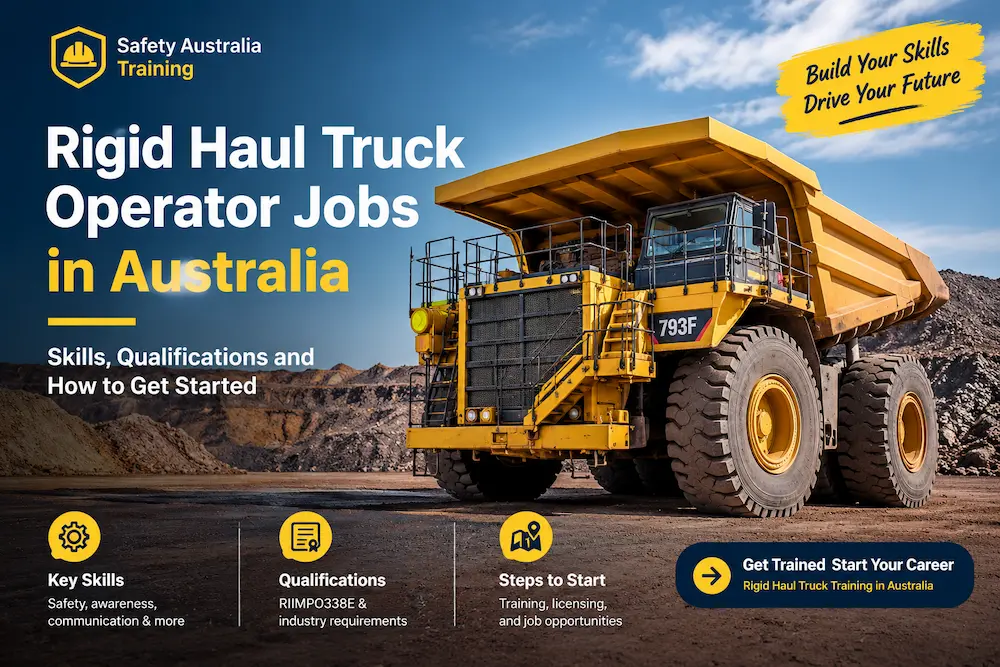
Quick Answer: How Do You Become a Rigid Haul Truck Operator in Australia?
To become a rigid haul truck operator in Australia, you generally need relevant equipment training and competency assessment, an understanding of workplace health and safety requirements, and the ability to operate heavy machinery safely. Employers may also require site inductions, medical assessments, drug and alcohol screening, previous experience or other site-specific qualifications.
A relevant training pathway is RIIMPO338E – Conduct Rigid Haul Truck Operations. The current national training register lists RIIMPO338 as its replacement, so candidates should confirm the applicable unit and course outcome with their training provider.
If you want to develop your rigid haul truck operating skills, explore the Rigid Haul Truck Training Course in Australia to learn about the available training and assessment pathway.
What Does a Rigid Haul Truck Operator Do?
A rigid haul truck operator drives and operates a large, heavy-duty truck used to transport materials around mining, quarrying and other industrial worksites. These trucks are designed to move substantial loads along designated haul roads and between loading, transport and dumping areas.
Unlike a conventional road truck, a rigid haul truck is specialised heavy plant designed for demanding off-road operations. Operators must understand the machine’s capabilities, follow site traffic management procedures and communicate effectively with other workers and equipment operators.
Typical Responsibilities
- Completing pre-start inspections and checking the machine’s condition before operation.
- Identifying workplace hazards and following site safety procedures.
- Positioning the truck correctly for loading by excavators, loaders or other equipment.
- Transporting ore, rock, soil, overburden or other materials along designated haul routes.
- Reversing, positioning and unloading materials in approved dumping areas.
- Monitoring warning indicators, alarms, load conditions and the surrounding work environment.
- Communicating with supervisors, spotters and other operators using site-approved communication systems.
- Reporting equipment faults and completing shutdown and post-operational checks.
These responsibilities require more than simply knowing how to steer a large vehicle. Safe haul truck operation involves consistent decision-making, situational awareness and compliance with workplace procedures.
Where Do Rigid Haul Truck Operators Work in Australia?
Rigid haul truck operators can work in several industries where large volumes of material need to be moved. The duties, equipment and entry requirements depend on the employer and worksite.
| Industry | Typical work | What to expect |
|---|---|---|
| Mining | Moving ore, waste rock and overburden. | Site-specific safety systems, traffic rules and operational procedures. |
| Quarrying | Transporting rock and extracted materials. | Working around loading equipment, haul roads and dumping areas. |
| Civil construction | Moving earth and bulk construction materials where suitable rigid haul trucks are used. | Changing ground conditions, restricted areas and coordination with plant operators. |
| Extractive operations | Hauling extracted materials to designated processing or stockpile areas. | Safe material handling and compliance with operational procedures. |
Mining is a common career path associated with rigid haul trucks, but completing training does not guarantee a mining job. Employers may have additional experience, fitness, competency and site-access requirements.
What Skills Do Rigid Haul Truck Operator Jobs Require?
Employers need operators who can handle equipment safely, follow instructions and work reliably as part of a site team. The following skills can help candidates prepare for job applications and workplace assessment.
Safe equipment operation
Understanding operating limits, braking, steering, machine stability and safe manoeuvring.
Hazard awareness
Recognising risks involving other machinery, pedestrians, uneven ground and changing conditions.
Communication
Following radio protocols and coordinating with supervisors, spotters and loading equipment operators.
Attention to detail
Checking equipment condition, recognising warning signals and reporting faults promptly.
Teamwork and reliability
Following instructions, arriving prepared and maintaining consistent work practices.
Situational awareness
Adjusting driving techniques to suit visibility, load weight, road conditions and site activity.
Many of these skills are developed through practical training, supervised experience and workplace instruction. Candidates should be prepared to demonstrate safe operating practices rather than rely on theoretical knowledge alone.
What Qualifications Do You Need to Become a Haul Truck Operator?
There is no single list of requirements that applies to every haul truck operator job in Australia. Requirements depend on the employer, the type of equipment, the industry and the relevant state or territory rules.
A relevant training option is RIIMPO338E – Conduct Rigid Haul Truck Operations. This unit covers the skills and knowledge associated with preparing for operations, carrying out pre-start checks, operating the truck, transporting and dumping materials, and completing post-operational activities.
Common Entry and Employment Requirements
- Relevant rigid haul truck training and competency assessment.
- A valid Unique Student Identifier (USI) for nationally recognised training, where required.
- Meeting the training provider’s enrolment and participation requirements.
- The ability to perform the role safely and meet any applicable fitness requirements.
- Completion of employer or site inductions before commencing work.
- Any additional medical, drug and alcohol screening or background checks required by the employer.
- Relevant experience or additional tickets, if specified in the job advertisement.
Important: Training Is Not a Guaranteed Job Offer
A statement of attainment confirms successful completion of the relevant unit of competency; it does not automatically provide employment, guarantee access to a mine site or replace other qualifications an employer may require. Always check the requirements of the job and the relevant worksite.
For more information about the role of competency-based training in safe truck operation, read The Crucial RIIMPO338E: Certifying Safe Rigid Haul Truck Operations in Australia.
Ready to Explore Rigid Haul Truck Training?
Learn about course requirements, practical training and assessment options before taking your next step towards a plant operator role.
How to Get Started as a Rigid Haul Truck Operator
If you are exploring rigid haul truck operator jobs in Australia, following a structured plan can help you understand the requirements and prepare for the next stage of your career.
- Research the jobs you want to apply for.
Review mining, quarrying and civil construction job advertisements to identify the equipment, qualifications and experience employers request. - Confirm the relevant training unit.
Check whether the employer or worksite requires RIIMPO338E or the current replacement unit, RIIMPO338, and verify the course outcome with the training provider. - Choose a suitable training provider.
Confirm that the provider is appropriately registered and authorised to deliver and assess the relevant unit. Ask about practical training, assessment, course duration and entry requirements. - Prepare for practical training.
Understand basic safety procedures, follow the provider’s instructions and arrive with the required identification and personal protective equipment. - Complete training and assessment.
Demonstrate the required knowledge and practical operating skills in the assessment environment. - Build relevant workplace readiness.
Look for suitable entry-level opportunities, supervised experience and additional training that match your intended industry. - Apply for suitable positions.
Prepare a clear resume that accurately lists your qualifications, practical experience, safety knowledge and any relevant site inductions.
For practical advice before enrolling, read How to Prepare for Rigid Haul Truck Training: Tips for First-Time Trainees. It provides a useful next step for candidates who want to understand how to prepare for their training.
Can Beginners Get Rigid Haul Truck Operator Jobs?
Yes, beginners can explore a career in haul truck operations, but entry-level opportunities depend on employer requirements, the type of work and the candidate’s demonstrated competency. Some positions are designed for experienced operators, while others may provide structured training or supervised development.
Completing a training course can help you develop relevant skills and demonstrate your commitment to safe equipment operation. However, a training certificate alone may not be sufficient for a position that requires previous mining experience or familiarity with a particular site.
Ways to Improve Your Readiness
- Search specifically for trainee, entry-level or inexperienced operator positions.
- Read job advertisements carefully before paying for additional training.
- Develop an understanding of workplace health and safety, hazard reporting and communication protocols.
- Be prepared to complete employer inductions and site-specific assessments.
- Consider related plant operator opportunities that can provide relevant experience.
- Keep your resume accurate and highlight transferable skills such as reliability, teamwork and following procedures.
Before booking a course, it is sensible to compare its outcomes with the requirements of the jobs you want. This helps you choose training that is relevant to your intended career rather than collecting qualifications without a clear purpose.
How to Find Rigid Haul Truck Operator Jobs in Australia
Once you understand the role and its training requirements, focus your search on employers and positions that match your current experience.
Where to Search
- Australian job boards using terms such as “rigid haul truck operator”, “haul truck operator” and “mining truck operator”.
- Mining companies and contractors advertising vacancies on their careers websites.
- Quarrying and civil construction companies that operate relevant heavy plant.
- Recruitment agencies specialising in mining, resources and civil construction.
- Employer trainee programs and entry-level roles that clearly state their experience requirements.
What to Include in Your Resume
- Relevant training units and statements of attainment.
- Accurate details of previous machinery or vehicle operating experience.
- Site inductions, licences and other qualifications relevant to the advertised position.
- Examples of following safety procedures, identifying hazards and reporting faults.
- Your availability, relevant work history and willingness to complete required site training.
Do not claim mining experience or equipment competency you have not obtained. Employers may verify qualifications and assess your practical skills as part of the recruitment process.
How Long Does Rigid Haul Truck Training Take?
Training duration depends on the provider, course structure, assessment requirements and the participant’s experience. Safety Australia Training lists the following durations for its rigid haul truck course:
| Participant pathway | Listed duration | Next step |
|---|---|---|
| Experienced operator | 1 day | Confirm the experience and assessment requirements. |
| Non-experienced operator | 2 days | Confirm the practical training pathway and current course details. |
These durations are specific to the provider’s published course information and should be confirmed before enrolment. Training duration does not represent a guaranteed timeframe for obtaining employment.
Is a Rigid Haul Truck Operator Career Right for You?
A career in haul truck operations may suit people who enjoy practical work, operating machinery and contributing to a team-based industrial environment. However, it is important to understand the demands of the role before committing to training or applying for jobs.
Consider These Factors
- Work environment: Mining and industrial sites may involve dust, noise, changing weather and remote locations.
- Roster and hours: Some employers operate shifts, rotating rosters or extended working days.
- Safety responsibilities: Operators must remain alert and follow site procedures throughout their shifts.
- Career development: Further experience and relevant qualifications may help you pursue other plant operation opportunities.
- Employment conditions: Pay, rosters, accommodation and travel arrangements vary by employer, location and experience.
Research actual vacancies and compare their requirements with your current skills before deciding which training or career pathway is most appropriate.
Take the Next Step Towards Rigid Haul Truck Training
Build your understanding of rigid haul truck operation, safety procedures and competency assessment. Review the course information and confirm that the training pathway matches your goals.
Frequently Asked Questions About Rigid Haul Truck Operator Jobs
1. How do I become a rigid haul truck operator in Australia?
Research the jobs you want, confirm the relevant competency requirements, complete suitable training and assessment, and apply for positions that match your experience. Employers may require additional inductions, medical checks or site-specific qualifications.
2. What qualification is relevant to rigid haul truck operations?
RIIMPO338E – Conduct Rigid Haul Truck Operations is a recognised unit associated with these skills. The national training register now lists RIIMPO338 as its replacement, so confirm the applicable unit with your training provider and employer.
3. Can I become a haul truck operator without mining experience?
Potentially, yes. Some employers consider candidates without previous mining experience, while others require proven operating experience. Look for entry-level or trainee vacancies and check their requirements before enrolling in a course.
4. How long does rigid haul truck training take?
Safety Australia Training lists one day for experienced operators and two days for non-experienced operators. Confirm the current course schedule and assessment requirements directly with the provider.
5. Does completing rigid haul truck training guarantee a mining job?
No. Training can demonstrate relevant competency, but employment depends on vacancies, employer selection criteria, experience and any additional site requirements.
6. What skills do employers expect from haul truck operators?
Employers commonly look for safe equipment operation, hazard awareness, effective communication, attention to detail, teamwork and the ability to follow site procedures. Specific requirements vary by role.
7. Do I need a heavy vehicle driver’s licence to operate a rigid haul truck?
Not necessarily for every off-road operation. Requirements depend on where and how the vehicle is operated and the applicable laws. A heavy vehicle driver’s licence, workplace competency or other authorisation may be required in particular circumstances. Confirm the rules with the relevant authority and employer.
8. Where can I find rigid haul truck operator jobs in Australia?
Search Australian job boards, mining company career pages, quarrying businesses, civil construction employers and specialist recruitment agencies. Use terms such as “rigid haul truck operator”, “haul truck operator” and “trainee mining operator”.
9. What is the difference between a rigid haul truck and an articulated haul truck?
A rigid haul truck has a fixed chassis, while an articulated haul truck uses a pivot joint between its front and rear sections. They are designed for different operating conditions, so training should match the equipment used in the intended job. Read more about the differences between rigid, articulated and belly dump truck training.
10. What should I do before enrolling in a rigid haul truck course?
Check the current unit code, course duration, entry requirements, assessment arrangements, fees and the training provider’s registration. Compare these details with the qualifications and experience requested in the jobs you plan to pursue.