If you’ve just completed your Dogging (DG) Licence and you’re wondering what comes next, the answer is almost certainly the Basic Rigging Licence (RB). It’s one of the most valuable High-Risk Work Licences you can hold in Australia — opening doors across construction, mining, infrastructure, and heavy industry. But what exactly does it allow you to do, and is it the right move for your career?
This guide covers everything you need to know: the scope of work, the legal requirements, the career opportunities, and how to get qualified fast.
What Is the Basic Rigging Licence (RB)?
The Basic Rigging Licence — also called the RB Licence or Rigger Ticket — is a nationally recognised High-Risk Work (HRW) Licence issued under the Work Health and Safety Regulations 2011. It’s awarded upon successful completion of the nationally accredited unit CPCCLRG3001 – Licence to Perform Rigging Basic Level.
Unlike a White Card or general safety certificate, the RB Licence authorises you to perform specific, high-risk rigging tasks that are otherwise illegal without the qualification. In other words, it’s not optional — it’s the law.
What Work Can You Legally Perform With an RB Licence?
This is the core question, and the answer is more extensive than most people expect. A Basic Rigging Licence allows you to:
Structural and Construction Rigging
- Erect and dismantle structural steelwork
- Install and position pre-cast concrete elements
- Set up and operate hoists, including mast-climbing hoists
Load Management and Movement
- Rig and direct the movement of plant and equipment
- Use mechanical load-shifting equipment such as cranes, with slings, chains, shackles, pulleys, and wire ropes
- Calculate load weights, plan lift sequences, and determine correct sling angles
Safety Systems Installation
- Install safety nets and static lines on worksites
- Set up perimeter safety screens and shutters
- Build and dismantle cantilever crane loading platforms
Hazard and Risk Management
- Conduct pre-start inspections on rigging equipment
- Identify and manage site hazards before and during lifts
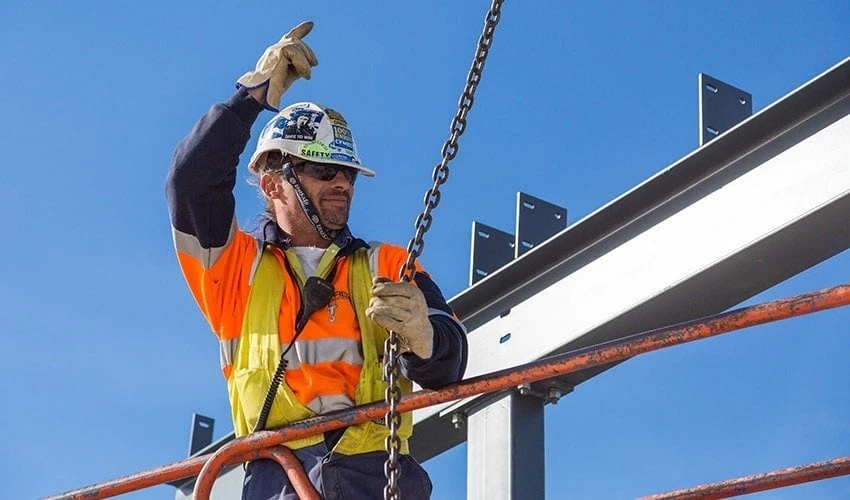
- Communicate lift plans and direct crane movements safely
In short, the RB Licence transforms you from someone who can assist with lifting operations into someone who can leadthem — and be legally accountable for doing so safely.
What’s the Difference Between Basic, Intermediate, and Advanced Rigging?
It’s a fair question, and one that confuses a lot of people entering the industry. Here’s the short version:
- Basic (RB): Covers the fundamental rigging tasks listed above — hoists, steel erection, pre-cast concrete, safety systems.
- Intermediate (RI): Adds more complex work including suspended scaffolds, gin wheels, and more advanced structural rigging.
- Advanced (RA): The highest level, covering complex multi-crane lifts, flying foxes, and specialised rigging for large infrastructure projects.
The good news? Each level builds directly on the last. You don’t need to start over — you build up. If you’re thinking about the long game, it’s worth understanding the full pathway before you begin. Check out this detailed breakdown of Basic vs Intermediate Rigging Courses in Australia to help you plan your career trajectory from the start.
Who Needs the RB Licence?
The Basic Rigging Licence is relevant to a wide range of workers across multiple industries. You should seriously consider getting your RB if you are:
- A dogman looking to take on more responsibility and command higher pay
- A construction worker involved in structural steel or pre-cast concrete work
- An operator on a site where hoists or mast-climbing platforms are used
- A crane operator who wants a deeper understanding of the rigging side of lifts
- A site supervisor or safety officer who needs to understand legal rigging requirements
- Anyone in mining, civil construction, or heavy industry who handles or directs the movement of large loads
If your work involves suspended loads, mechanical lifting equipment, or structural assembly of any kind, the RB Licence is almost certainly relevant to your role.
What Are the Prerequisites?
Before you can enrol in the Basic Rigging course, you must hold a current Dogging (DG) Licence. There are no exceptions — it’s a legal requirement set by the relevant WHS authority in your state or territory.
In addition, you’ll need to:
- Be at least 18 years old
- Hold a Unique Student Identifier (USI)
- Have basic numeracy and literacy skills (you’ll need to read load charts and perform simple calculations)
- Be physically capable of performing rigging tasks on a worksite
- Wear appropriate PPE throughout training and assessment
If you don’t yet have your DG Licence, that’s your first step. Once you hold it, you’re eligible to enrol straight away.
What Does the Course Cover?
The CPCCLRG3001 course is delivered over 5 days and combines classroom theory with hands-on practical training. You won’t just sit through lectures — you’ll be on the tools, working with real rigging equipment under the supervision of experienced industry trainers.
Key areas covered include:
- Planning operations: Hazard identification, risk management, and pre-lift consultation
- Equipment selection: Choosing the correct slings, shackles, pulleys, and rigging hardware for each job
- Load calculations: Determining safe working loads, sling angles, and weight distribution
- Rigging setup: Preparing loads and rigging systems for mechanical lifting
- Directing crane movements: Communicating with crane operators and managing lifts safely
- WHS compliance: Understanding your legal obligations under Australian safety legislation
- Conclusion of operations: Safe shutdown, equipment inspection, and site pack-up procedures
Assessment includes both a written theory component and a practical demonstration. You’ll need to pass both to receive your Statement of Attainment and apply for your HRW Licence through SafeWork or WorkSafe in your state.
What Happens After You Qualify?
Once you pass your course and lodge your assessment with the relevant WHS authority, you’ll receive a nationally recognised Statement of Attainment for CPCCLRG3001 and a High-Risk Work Licence (Class RB) valid across all Australian states and territories.
From there, your career options expand significantly. Qualified basic riggers are in demand across:
- Commercial and residential construction
- Civil infrastructure (bridges, tunnels, roads)
- Mining and resources
- Manufacturing and heavy industry
- Ports and logistics
- Energy (wind, solar, oil and gas)
Roles you can apply for include Basic Rigger, Construction Rigging Technician, Lift Supervisor, and Site Safety Support. Pay rates for qualified riggers in Australia consistently sit well above the national average — and the demand isn’t slowing down.
Want to know exactly how to turn your RB Licence into a full rigging career? Read our complete guide on how to get your RB Licence and become a pro rigger for a step-by-step breakdown of the process.
Where Can You Train?
Safety Australia Training runs the CPCCLRG3001 Basic Rigging course at multiple locations across the country, with new intakes starting every week:
- Sydney — Regents Park, Yennora, and Ingleburn
- Melbourne — Dandenong South and Carrum Downs Brisbane — Salisbury
- Perth — Bibra Lake
Courses are available throughout the year with flexible start dates, so you can find a schedule that works around your current commitments.
Ready to Get Your RB Licence?
The Basic Rigging Licence is one of the most career-defining qualifications you can hold in the Australian construction and industrial sector. It gives you the legal authority to perform complex, high-value rigging work — and the skills to do it safely.
With classes running every week across Sydney, Melbourne, Brisbane, and Perth, there’s no reason to wait.
Enrol in the Basic Rigging Licence (RB) course at Safety Australia Training today — secure your spot with a $500 deposit and take the next step in your rigging career.