Australia’s large regional areas, remote work sites and extensive network of unsealed roads mean that four-wheel drive (4WD) vehicles are important in many industries. Workers in mining, tourism, emergency response and environmental management may need to travel beyond sealed roads to reach work locations safely.
Quick Answer: What Jobs Can Benefit from 4WD Training?
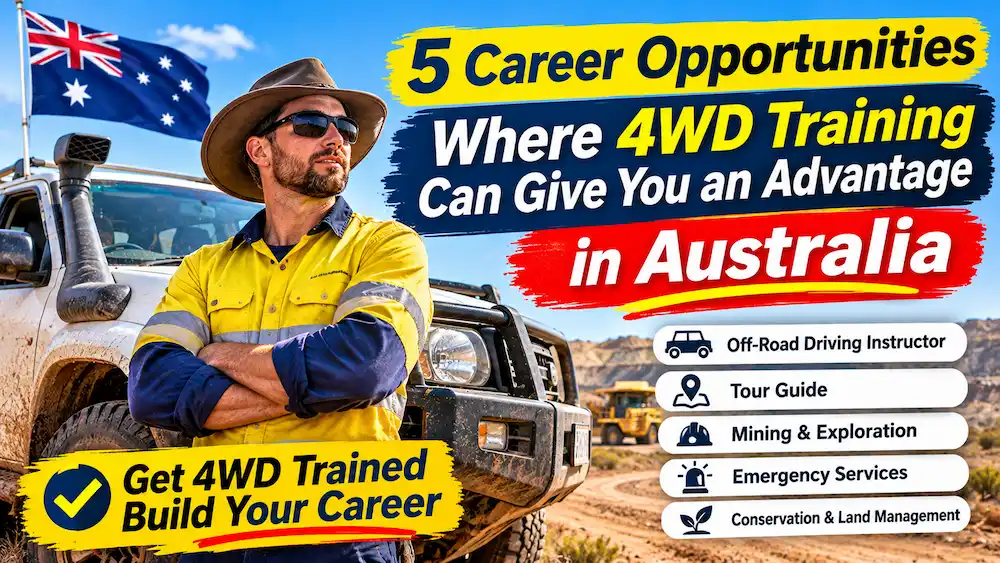
4WD training can be valuable in Australian jobs that involve driving on unsealed roads, remote tracks, rough terrain or off-road work sites. Potential career areas include off-road driver instruction, adventure tourism, mining and exploration, emergency response, and conservation or land management. However, 4WD training is generally an additional workplace skill rather than a standalone professional qualification. Employers may require other licences, experience and industry-specific certifications.
For people interested in these industries, 4WD training in Australia can help develop practical driving skills and improve confidence when operating a four-wheel drive vehicle in challenging conditions. It can also demonstrate an understanding of vehicle preparation, terrain assessment, safe driving techniques and workplace procedures.
But what types of jobs can benefit from 4WD training? And does completing a 4WD course automatically qualify someone for a particular role?
This guide explores five career areas where 4WD skills may be useful, the responsibilities involved and the additional qualifications employers may expect.
Want to improve your off-road driving skills?
Learn how workplace 4WD training can help you prepare for driving across challenging terrain, remote tracks and demanding work environments.
1. Off-Road Driving Instructor

Off-road driving instructors teach individuals and groups how to operate four-wheel drive vehicles safely in different terrain conditions. They may work for specialist driver training providers, commercial training organisations or outdoor education businesses.
Depending on the employer and course type, instructors may demonstrate techniques for driving on sand, gravel, mud, uneven tracks and steep terrain. They may also explain vehicle preparation, tyre pressure considerations, route planning and safe recovery practices.
Typical responsibilities
- Demonstrating safe 4WD driving techniques.
- Teaching vehicle preparation and pre-drive inspections.
- Explaining the use of high-range and low-range 4WD settings.
- Demonstrating safe vehicle positioning and terrain assessment.
- Explaining recovery equipment, recovery risks and prevention techniques.
- Supervising practical driving exercises.
Additional requirements
Professional instructors may need relevant driver training qualifications, assessor or trainer credentials, industry experience and the appropriate vehicle licence. Completing a general workplace 4WD course does not automatically qualify someone to deliver accredited training or assess other drivers.
Career relevance: 4WD competency can provide useful practical experience for people interested in off-road driver education, but additional training and industry credentials are generally necessary for instructor positions.
2. Adventure Tourism and 4WD Tour Guide

Australia offers a wide range of four-wheel drive tourism experiences, including guided trips through outback landscapes, coastal tracks, national park access routes and remote regional destinations.
Tour guides and drivers may need to operate 4WD vehicles while transporting visitors, equipment and supplies through areas where road conditions can be unpredictable.
Typical responsibilities
- Driving tour vehicles across suitable off-road routes.
- Planning journeys and checking track conditions.
- Conducting vehicle and equipment inspections.
- Explaining safety instructions to passengers.
- Monitoring weather, road and environmental conditions.
- Responding appropriately to vehicle problems or unexpected changes in conditions.
Additional requirements
Depending on the tour operation, employers may require a suitable driver licence, passenger transport authorisation, first aid training, tourism qualifications and experience in customer service. Commercial tour operators may also have specific vehicle, insurance and safety requirements.
Career relevance: 4WD training can be particularly useful for people interested in regional tourism, outdoor recreation and guided driving experiences.
3. Mining, Exploration and Remote Site Roles

Mining and resource projects often operate in regional and remote locations. Employees may need to travel between site facilities, exploration areas, field locations and project access points using four-wheel drive vehicles.
4WD skills can be relevant to several mining and exploration positions, particularly where workers need to travel over unsealed roads or remote tracks as part of their duties.
Potential job roles
- Exploration field technician: Travels to field locations and supports geological or exploration activities.
- Geologist: Conducts field investigations, geological mapping and sampling activities.
- Mining site supervisor: May travel around operational areas to inspect work activities and coordinate teams.
- Field service technician: Travels to remote sites to inspect, maintain or repair equipment.
- Site logistics personnel: May transport equipment, supplies or personnel where authorised.
Why 4WD skills matter
Workers travelling through remote mining environments need to understand vehicle limitations, route conditions, communication procedures and workplace travel requirements. Safe driving practices can help reduce the risk of incidents, vehicle damage and delays.
Additional requirements
Mining employers may require a relevant trade, technical qualification, industry experience, site induction, medical assessment, drug and alcohol screening and additional safety training. The requirements depend on the position and employer.
Career relevance: 4WD training can be a useful additional skill for people applying for field-based mining, exploration and remote site positions. It does not replace the technical qualifications or site authorisations required for these jobs.
4. Emergency Services and Remote Response

Emergency response organisations may operate vehicles in rural, regional and remote environments where sealed roads are limited. Four-wheel drive capability can help authorised personnel access locations that ordinary passenger vehicles may not be suitable for.
Depending on the organisation and role, 4WD skills may be useful in areas such as:
- Rural and regional fire response.
- Remote-area medical support.
- Search and rescue operations.
- Emergency management and field support.
- Disaster response and recovery activities.
Typical responsibilities
- Driving authorised emergency vehicles across suitable terrain.
- Following dispatch instructions and designated routes.
- Conducting vehicle checks and monitoring equipment.
- Communicating with other response personnel.
- Following operational procedures and incident safety requirements.
Additional requirements
Emergency services positions generally require role-specific selection, training and authorisation. Firefighting, ambulance, rescue and emergency management roles may require formal emergency response, medical, rescue or operational qualifications. A 4WD course alone does not qualify someone to perform these duties.
Career relevance: 4WD competency can support personnel who need to drive in difficult conditions as part of an authorised emergency response role.
5. Conservation, Parks and Land Management

Conservation and land management professionals often work in national parks, reserves, forests, rural properties and other locations that may only be accessible by unsealed roads or four-wheel drive tracks.
For these roles, 4WD skills can help workers travel safely to field locations while transporting equipment and carrying out environmental or land management activities.
Potential job roles
- Park ranger: Supports park management, visitor safety, conservation and compliance activities.
- Wildlife officer: May travel to remote locations to monitor wildlife and support conservation programs.
- Environmental field technician: Collects samples and conducts field inspections.
- Land management officer: Supports vegetation management, rehabilitation and land maintenance projects.
- Field survey assistant: Travels to remote sites to support mapping, surveying or environmental investigations.
Why 4WD training is useful
Field-based workers may encounter muddy tracks, loose surfaces, steep sections, water crossings and isolated work areas. Understanding vehicle handling, route planning and environmental responsibilities can help them complete fieldwork more safely.
Additional requirements
Employers may request qualifications in environmental science, conservation, natural resource management, biology or a related field. Some positions may also require first aid, field safety, machinery operation or specific government authorisations.
Career relevance: 4WD training can complement the technical and fieldwork skills needed for conservation, environmental monitoring and land management careers.
Comparison: Jobs Where 4WD Training Can Be Useful
Career area
How 4WD skills may help
Other possible requirements
Off-road driving instructor
Demonstrating safe off-road driving techniques.
Trainer or assessor credentials and relevant experience.
Adventure tourism guide
Driving tour vehicles on remote and rugged routes.
Suitable driver licence, first aid and tourism-related requirements.
Mining and exploration
Travelling between remote work areas and field locations.
Technical qualifications, site induction and role-specific training.
Emergency services
Accessing difficult locations in authorised response vehicles.
Emergency response, medical or rescue qualifications.
Conservation and land management
Reaching remote fieldwork and monitoring locations.
Environmental or conservation qualifications and field experience.
What Skills Do You Learn in a Workplace 4WD Course?
| Career area | How 4WD skills may help | Other possible requirements |
|---|---|---|
| Off-road driving instructor | Demonstrating safe off-road driving techniques. | Trainer or assessor credentials and relevant experience. |
| Adventure tourism guide | Driving tour vehicles on remote and rugged routes. | Suitable driver licence, first aid and tourism-related requirements. |
| Mining and exploration | Travelling between remote work areas and field locations. | Technical qualifications, site induction and role-specific training. |
| Emergency services | Accessing difficult locations in authorised response vehicles. | Emergency response, medical or rescue qualifications. |
| Conservation and land management | Reaching remote fieldwork and monitoring locations. | Environmental or conservation qualifications and field experience. |
A workplace-focused 4WD course is designed to help participants understand how to prepare and operate a four-wheel drive vehicle in relevant work environments. The exact content depends on the course and unit of competency being delivered.
Training may cover the following areas:
1. Vehicle Preparation and Pre-Drive Checks
Participants learn to inspect the vehicle, identify potential faults, check relevant equipment and prepare for the planned journey.
2. Understanding 4WD Controls
Training may explain the vehicle’s drivetrain, high-range and low-range settings, traction controls, tyres and other equipment. Drivers need to understand when and how to use the available controls in accordance with the vehicle manufacturer’s instructions.
3. Driving on Different Terrain
Participants develop techniques for handling suitable unsealed roads and off-road conditions. These may include gravel, sand, mud, uneven surfaces and gradients, depending on the course and assessment environment.
4. Hazard Identification and Risk Management
Drivers learn to recognise hazards such as unstable surfaces, steep slopes, reduced visibility, changing weather and environmental obstacles. They must assess conditions and choose appropriate controls before proceeding.
5. Route Planning and Environmental Awareness
Journey planning involves considering the route, expected conditions, vehicle capability, communication arrangements and potential environmental impacts.
For a broader explanation of course content and practical training, read our guide: Everything About 4WD Training in Australia.
Why Understanding High Range and Low Range Matters
One important part of four-wheel drive operation is understanding the difference between high-range and low-range settings. Selecting the correct range depends on the vehicle, terrain, driving conditions and manufacturer’s instructions.
- High range: Generally suitable for normal driving and many unsealed roads where additional low-speed gearing is not required.
- Low range: Provides lower gearing and greater control at low speeds in demanding conditions where the vehicle manufacturer’s guidance permits its use.
Using the wrong setting can affect vehicle handling and place unnecessary strain on drivetrain components. Drivers should understand the limitations of their specific vehicle before entering difficult terrain.
For a more detailed explanation, read: When Should You Use 4WD High Range vs Low Range?.
Does 4WD Training Guarantee a Job in Australia?
No. Completing a 4WD course does not guarantee employment or automatically qualify someone for a specific occupation.
Its value depends on whether the target role involves operating four-wheel drive vehicles and whether the employer recognises or requires the relevant training.
For example, a mining employer may consider 4WD competency useful for a field technician who regularly travels to remote exploration areas. However, the same position may also require geological, technical or trade-related experience.
Before enrolling, jobseekers should:
- Review current job advertisements in their preferred industry and location.
- Identify whether employers request a specific 4WD unit or general off-road driving experience.
- Check the required driver licence class and any vehicle restrictions.
- Identify additional qualifications, inductions or certifications required for the role.
- Confirm that the training course matches the employer’s requirements.
How to Choose the Right 4WD Training Course
Not every 4WD course has the same purpose. Some are recreational driving courses, while others are designed for workplace operations and nationally recognised competency assessment.
Before booking, consider these factors:
- Course recognition: Check whether the course is nationally recognised training or non-accredited driver education.
- Unit of competency: Confirm the exact unit code and its current status on the National Training Register.
- Practical training: Ask what driving activities and terrain conditions are included.
- Assessment: Confirm how practical skills and underpinning knowledge are assessed.
- Entry requirements: Check the required driver licence and any experience or equipment requirements.
- Workplace relevance: Make sure the training aligns with the type of vehicle operation required by your employer.
For example, the National Training Register’s TLIC0023 unit covers operating a four-wheel drive vehicle and includes vehicle controls, operational hazards, driving techniques and workplace procedures. The appropriate unit for an individual will depend on their job and training requirements.
Take the Next Step with 4WD Training
Whether you work in mining, construction, tourism or field operations, developing safe four-wheel drive skills can help you prepare for workplace driving conditions.
Frequently Asked Questions About 4WD Training and Jobs
1. What jobs in Australia require 4WD training?
Some field-based jobs in mining, exploration, conservation, emergency response and adventure tourism may require or prefer 4WD driving skills. Requirements depend on the employer, location and duties of the position.
2. Can 4WD training help me get a mining job?
It can strengthen your practical skill set for mining and exploration positions that involve remote travel. However, mining jobs often require additional technical qualifications, site inductions, experience and safety training.
3. Is 4WD training useful for park ranger jobs?
Yes. Some park ranger and conservation roles involve travelling on unsealed roads or remote tracks. 4WD competency may be useful, although employers can also require environmental qualifications, field experience and other role-specific skills.
4. Do I need a special licence to drive a 4WD in Australia?
A 4WD vehicle generally requires the appropriate driver licence for its vehicle class. Additional workplace authorisation or training may be required by an employer. Check the applicable state or territory licensing rules and the requirements of the vehicle and role.
5. Does a 4WD course qualify me to become an off-road driving instructor?
Not automatically. Instructor positions may require additional trainer or assessor credentials, relevant experience and the qualifications needed to deliver the particular training program.
6. What is the difference between recreational and workplace 4WD training?
Recreational courses generally focus on improving off-road driving skills for personal use. Workplace training is designed around operational requirements, safety procedures and relevant competency standards for driving as part of a job.
7. Is 4WD training useful for emergency services?
It can be useful for authorised personnel who operate emergency vehicles in rural or remote areas. However, emergency response roles require additional role-specific training and authorisation.
8. How can I find out whether a 4WD course is suitable for my job?
Check the job advertisement, ask the employer which competency or course they require, and confirm the training provider delivers the relevant unit. You should also check the practical training and assessment arrangements before enrolling.
Final Thoughts
4WD driving skills can be valuable in many Australian industries where employees need to travel through remote locations, unsealed roads and challenging terrain. Off-road driving instruction, adventure tourism, mining, emergency services and conservation are five career areas where these skills may be useful.
However, 4WD training should be viewed as a practical workplace capability rather than a guaranteed pathway into a particular job. The right course can help develop vehicle handling, hazard awareness, route planning and safe operating practices, while additional industry qualifications may still be required.
If your current or intended role involves operating a four-wheel drive vehicle at work, choosing training that matches your employer’s requirements is an important first step.
Develop Your 4WD Driving Skills
Prepare for workplace driving conditions with practical 4WD training. Explore the course and find out whether it suits your industry and job requirements.