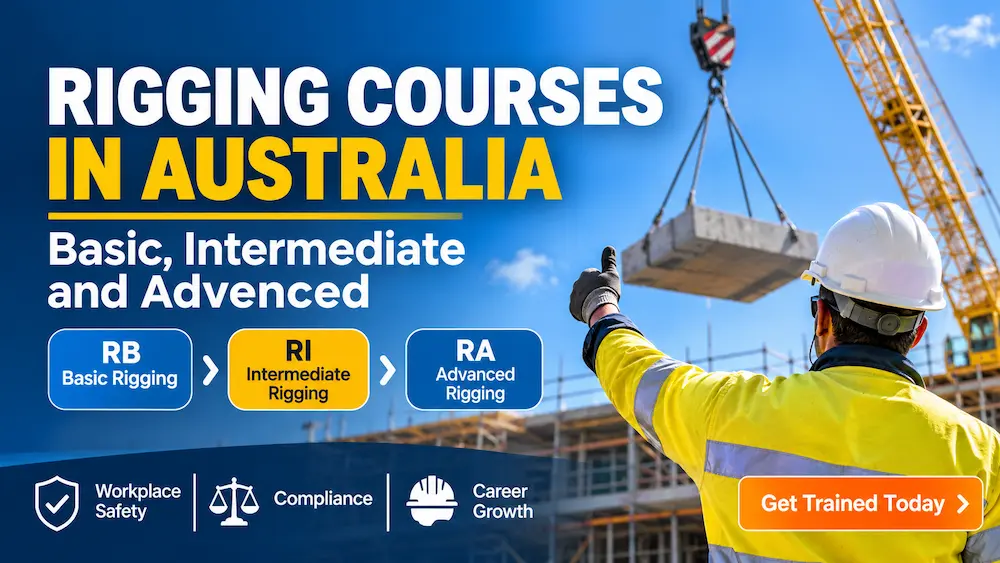
Rigging is an essential part of Australia’s construction, mining, manufacturing and infrastructure industries. From installing structural steel and positioning precast concrete to coordinating complex crane lifts, qualified riggers play an important role in ensuring heavy loads are moved safely and accurately.
What are the different rigging courses in Australia?
Rigging training in Australia is divided into three High Risk Work Licence (HRWL) classes: Basic Rigging (RB), Intermediate Rigging (RI) and Advanced Rigging (RA). Each licence covers different types of lifting and rigging operations, with higher classes allowing workers to undertake more complex tasks. To progress to Intermediate Rigging, you must hold the relevant Basic Rigging licence.
If you’re considering a career in rigging or looking to expand your existing skills, understanding the different rigging courses in Australia is an important first step. The Australian High Risk Work Licence system recognises three main rigging classes: Basic Rigging (RB), Intermediate Rigging (RI) and Advanced Rigging (RA).
Each class covers a different scope of work and requires the appropriate training and assessment. Understanding the differences can help you choose the right course, meet workplace licensing requirements and plan your career progression.
Ready to progress beyond Basic Rigging?
Develop the skills required for more complex lifting operations with nationally recognised Intermediate Rigging training. Learn about course requirements, practical assessments and available training locations.
Why Is Rigging Training Important?
Rigging involves more than attaching lifting equipment to a load. Workers must understand load characteristics, equipment selection, lifting methods, site conditions and communication procedures. Incorrect rigging decisions can result in dropped loads, equipment damage, serious injuries and costly project delays.
Completing the appropriate rigging training is important for several reasons:
- Workplace safety: Learn how to identify hazards, inspect lifting equipment and apply safe lifting procedures.
- Legal compliance: Certain rigging activities are classified as high-risk work under Australian WHS regulations and require the relevant High Risk Work Licence.
- Practical skills: Develop the ability to select suitable equipment, prepare lifting operations and communicate effectively with crane operators and other workers.
- Career development: Progress from basic rigging duties to more specialised and complex lifting operations as your qualifications and experience develop.
Choosing the correct licence is particularly important because each rigging class has a defined scope of work. Holding a lower-level licence does not automatically authorise you to perform tasks covered by a higher class.
Understanding the Three Rigging Licence Classes in Australia
Australian rigging qualifications follow a progressive licensing structure. The three main classes are RB, RI and RA, with each level covering additional types of rigging work.
| Licence Class | Licence Code | Main Work Scope |
|---|---|---|
| Basic Rigging | RB | Structural steel, hoists, precast concrete and safety systems. |
| Intermediate Rigging | RI | Cranes, conveyors, tilt slabs, demolition and dual lifts. |
| Advanced Rigging | RA | Gin poles, shear legs, flying foxes and suspended scaffolds. |
1. Basic Rigging Course – RB Licence
The Basic Rigging course is the entry-level rigging qualification. It is designed for workers who need to perform rigging activities associated with structural steel erection, hoists, precast concrete and other specified lifting operations.
A Basic Rigging Licence covers dogging work as well as the rigging activities included in the RB classification.
Key work activities covered by Basic Rigging include:
- Erecting structural steel components.
- Working with specified hoists, including mast climbing work platforms.
- Positioning precast concrete members of a structure.
- Installing safety nets and static lines.
- Setting up perimeter safety screens and shutters.
- Operating cantilevered crane loading platforms within the licence scope.
Basic Rigging is suitable for workers who want to develop foundational rigging capabilities and qualify for the next stage of their rigging career.
2. Intermediate Rigging Course – RI Licence
The Intermediate Rigging Licence (RI) is the next qualification in the Australian rigging pathway. It builds on the skills covered by Basic Rigging and allows workers to undertake additional rigging activities involving more complex equipment, loads and lifting operations.
Workers holding an RI licence can perform work covered by the Basic Rigging classification, as well as additional activities such as:
- Rigging operations involving cranes, conveyors, dredges and excavators.
- Working with hoists fitted with jibs and self-climbing hoists.
- Handling and positioning tilt slabs.
- Rigging associated with the demolition of structures or plant.
- Coordinating dual-lift operations involving multiple lifting devices.
These activities require a stronger understanding of lifting plans, equipment selection, load characteristics, risk management and communication between members of the lifting team.
For workers looking to expand their responsibilities and take on more challenging rigging projects, obtaining an RI ticket is an important career development step.
Take the next step in your rigging career with an RI Licence
Safety Australia Training offers the nationally recognised CPCCLRG3002 – Licence to Perform Rigging Intermediate Level course. The training includes theory and practical assessment and is designed for eligible candidates who hold the required Basic Rigging qualification.
View RI Course Details, Locations & Dates →
Course duration: 5 days | Qualification: CPCCLRG3002 | Prerequisite: Basic Rigging (RB)
3. Advanced Rigging Course – RA Licence
The Advanced Rigging course is designed for experienced riggers who need to undertake highly specialised rigging operations.
Advanced Rigging builds on the competencies covered by Basic and Intermediate Rigging. It includes activities that involve specialised lifting systems and structures, such as:
- Gin poles and shear legs.
- Flying foxes and cableways.
- Guyed derricks and structures.
- Suspended scaffolds and fabricated hung scaffolds.
These operations often involve complex site conditions, specialised equipment and detailed planning. Workers must understand the relevant lifting methods, equipment limitations and risk controls before undertaking these activities.
An Advanced Rigging Licence is particularly relevant to experienced workers involved in specialised construction, infrastructure and industrial lifting projects.
What Is the Difference Between RB, RI and RA Rigging Licences?
The main difference between the three rigging licences is the scope and complexity of work each authorises. Each higher class includes the work covered by the preceding rigging classes, together with additional specialised activities.
- RB Licence: Covers basic rigging activities, including structural steel erection, specified hoists and precast concrete.
- RI Licence: Includes all RB work, plus additional operations involving cranes, tilt slabs, demolition and dual lifts.
- RA Licence: Includes RB and RI work, plus specialised operations involving gin poles, shear legs, flying foxes and suspended scaffolds.
Understanding these differences helps workers select the right training pathway and ensures they hold the appropriate licence for the work they are expected to perform.
How Do You Progress from Basic to Advanced Rigging?
Rigging qualifications follow a hierarchical pathway. Workers must obtain the appropriate lower-level qualification before progressing to the next class.
Dogging Licence (DG)
Foundation for the rigging licensing pathway
Basic Rigging (RB)
First rigging licence class
Intermediate Rigging (RI)
Progression to more complex rigging operations
Advanced Rigging (RA)
Specialised rigging operations
For example, a worker interested in obtaining an Intermediate Rigging Licence must first hold the relevant Basic Rigging Licence. The pathway also requires the relevant dogging qualification at the foundational stage.
Each licence application is subject to the requirements of the relevant state or territory WHS regulator. Candidates must complete the required nationally recognised training and assessment and satisfy the applicable licensing requirements.
What Does Intermediate Rigging Training Involve?
Intermediate Rigging training combines theoretical knowledge with practical activities designed to develop the skills required for the RI licence.
Theory Training
The theoretical component helps candidates understand the principles behind safe rigging operations, including:
- Identifying workplace hazards and applying risk controls.
- Selecting appropriate lifting equipment for different operations.
- Understanding load characteristics and lifting requirements.
- Preparing lifting equipment and work areas.
- Following relevant workplace procedures and safety requirements.
Practical Training
Practical training gives candidates the opportunity to demonstrate their rigging skills through relevant workplace activities. Depending on the assessment requirements, this includes preparing equipment, inspecting lifting gear, rigging loads, directing crane movements and safely completing lifting operations.
Both components are important because a qualified rigger must be able to apply theoretical knowledge in real workplace conditions.
Common Rigging Mistakes to Avoid
Rigging mistakes can create serious risks during lifting operations, particularly when workers are dealing with complex loads and equipment. Some common problems include:
- Incorrectly estimating load weight or centre of gravity.
- Selecting lifting equipment that is unsuitable for the task.
- Failing to inspect slings, shackles and other lifting gear.
- Ignoring environmental conditions and potential lifting hazards.
- Using unclear communication signals during crane operations.
- Proceeding with lifting activities without appropriate planning and risk controls.
Understanding these issues is an important part of developing safe and competent rigging practices. Read our detailed guide to common rigging mistakes at intermediate and advanced levels to learn more about the risks and how to avoid them.
Choosing the Right Rigging Course for Your Career
The right rigging course depends on your existing qualifications, work responsibilities and career objectives.
- New to rigging? Start by understanding the dogging and Basic Rigging licensing requirements.
- Already hold an RB Licence? Consider Intermediate Rigging if your work involves more complex lifting operations.
- Experienced in intermediate rigging? Advanced Rigging may be the next step if your role involves specialised lifting systems and structures.
Before enrolling, check the course prerequisites, training location, assessment requirements and the scope of the licence you intend to obtain.
If you want to understand the broader benefits of formal rigging qualifications, see our guide on the importance of rigging courses, from basic skills to advanced techniques.
Advance Your Skills with Intermediate Rigging Training
Ready to expand your rigging capabilities? Explore the Intermediate Rigging Licence course at Safety Australia Training. Find course information, available training locations and upcoming dates.
Frequently Asked Questions About Rigging Courses in Australia
1. What are the three types of rigging licences in Australia?
Australia has three main rigging High Risk Work Licence classes: Basic Rigging (RB), Intermediate Rigging (RI) and Advanced Rigging (RA). Each class covers different types of rigging activities and lifting operations.
2. What is the difference between an RB and RI licence?
An RB licence covers basic rigging activities such as structural steel erection, specified hoists and precast concrete work. An RI licence includes all RB work and additional activities involving cranes, conveyors, tilt slabs, demolition and dual lifts.
3. Do I need a Basic Rigging Licence before Intermediate Rigging?
Yes. Candidates must hold the relevant Basic Rigging (RB) qualification before obtaining an Intermediate Rigging Licence. The dogging qualification is also part of the foundational rigging licensing pathway.
4. How long does an Intermediate Rigging course take?
The Intermediate Rigging course offered by Safety Australia Training has a listed duration of five days. The training includes theoretical and practical assessment. Check the course page for current delivery details.
5. What qualification is required for an Intermediate Rigging Licence?
The nationally recognised unit of competency is CPCCLRG3002 – Licence to perform rigging intermediate level. Candidates must meet the applicable prerequisites and licensing requirements.
6. What jobs can I pursue with an Intermediate Rigging Licence?
An RI licence can support employment opportunities in construction, infrastructure, industrial maintenance and other industries involving complex lifting operations. Relevant job titles may include intermediate rigger and rigging crew member, depending on experience and employer requirements.
7. Can an Intermediate Rigger perform Basic Rigging work?
Yes. The RI licence includes the work covered by the RB classification, as well as additional intermediate rigging activities.
8. What is an Advanced Rigging Licence used for?
An Advanced Rigging (RA) Licence covers specialised rigging activities such as gin poles, shear legs, flying foxes, cableways, guyed derricks and suspended scaffolds, in addition to work covered by lower rigging classes.
Start Your Rigging Training Journey
Rigging qualifications provide an important pathway for workers seeking to develop their skills and take on more demanding lifting operations. From Basic Rigging through to Advanced Rigging, each licence class expands the range of work a qualified rigger can undertake.
If you already hold a Basic Rigging Licence and want to progress to more complex lifting activities, Intermediate Rigging is the next qualification to consider. With nationally recognised training and practical assessment, you can develop the competencies needed to work towards your RI High Risk Work Licence.
Explore the Intermediate Rigging course at Safety Australia Training and take the next step in your rigging career.