TLILIC0018 is the nationally recognised unit of competency associated with operating a non-slewing mobile crane with a capacity greater than 3 tonnes. The unit covers the knowledge and practical skills required to plan, prepare for, operate and safely shut down a non-slewing mobile crane in accordance with workplace procedures, manufacturer requirements and relevant safety obligations.
A non-slewing mobile crane is a powered mobile crane fitted with a boom or jib that cannot slew. The equipment may be used across construction, infrastructure, transport, mining and other industries where materials and loads need to be lifted, moved and positioned.
It is important to understand that completing a unit of competency and obtaining a High Risk Work Licence are related but not identical processes. The current national training register shows that TLILIC0018 has been superseded by TLILIC0040. People seeking a current course should confirm the unit code and licensing requirements with their registered training organisation and the relevant workplace health and safety regulator.
What Is TLILIC0018?
TLILIC0018 was the unit of competency titled Licence to operate a non-slewing mobile crane (greater than 3 tonnes capacity). It was designed for people who need to demonstrate the skills and knowledge required to safely operate a non-slewing mobile crane with a rated capacity exceeding 3 tonnes.
The unit covered the complete operating process, including:
- Planning the crane operation and work task
- Inspecting the work area and assessing ground conditions
- Checking the crane’s rated capacity and load requirements
- Identifying hazards and applying risk controls
- Positioning and stabilising the crane
- Checking lifting equipment and working load limits
- Communicating with associated personnel
- Operating the crane and controlling loads safely
- Setting up exclusion zones where required
- Completing shutdown and post-operation procedures
The practical requirements are designed to assess whether a person can safely perform crane operations in realistic workplace conditions rather than simply demonstrate theoretical knowledge.
What Is the Current Replacement for TLILIC0018?
For people researching the TLILIC0018 non-slewing crane course today, it is important to check the current unit code before enrolling. The national training register lists TLILIC0040 – Licence to operate a non-slewing mobile crane (greater than 3 tonnes capacity) as the current unit that supersedes TLILIC0018.
Training providers may still use the older TLILIC0018 code in historical course information, search results or older content. However, students should confirm that the course they are booking is based on the current nationally recognised unit and meets the licensing requirements applicable in the state or territory where they intend to work.
How Does the Non-Slewing Crane Licence Work in Australia?
In Australia, operating certain types of high risk work equipment requires the appropriate High Risk Work Licence. A non-slewing mobile crane with a capacity greater than 3 tonnes is generally associated with the CN licence class.
The exact application process can vary between Australian states and territories because High Risk Work Licences are administered through the relevant workplace health and safety regulator. Completing the required training and assessment is an important part of the process, but applicants should also check the specific licensing requirements that apply in their jurisdiction.
A person who successfully completes the required training and assessment may then need to apply for the relevant High Risk Work Licence through the appropriate state or territory authority.
What Does a Non-Slewing Mobile Crane Operator Do?
A non-slewing mobile crane operator is responsible for safely operating a crane that uses a boom or jib to lift and move loads without slewing the crane superstructure.
Depending on the workplace and type of equipment, daily responsibilities may include:
- Inspecting the crane before operation
- Reviewing the work task and lift requirements
- Checking ground conditions and the operating area
- Confirming the crane’s rated capacity
- Checking lifting equipment and working load limits
- Establishing a safe operating area
- Communicating with doggers, riggers and other site personnel
- Moving and positioning loads safely
- Monitoring the stability of the crane and load
- Reporting hazards or unsafe conditions
- Securing and shutting down the crane after operations
Crane operators must be able to follow workplace procedures, manufacturer instructions, lift plans and relevant safety requirements.
What Is Covered in a Non-Slewing Crane Course?
A non-slewing crane course generally combines theoretical learning with practical assessment. The course is designed to help participants understand the equipment, identify workplace hazards and demonstrate safe crane operating skills.
Planning the Work Task
Before operating a crane, the operator needs to understand the task and the requirements of the lift. This can include reviewing work orders, confirming the lift plan, inspecting the work area and communicating with other people involved in the operation.
Checking Ground Conditions and Crane Stability
The stability of a mobile crane is an essential part of safe operation. Operators need to consider the condition and suitability of the operating surface, the position of the crane and the requirements of the specific lift.
Understanding Rated Capacity and Load Requirements
Operators must understand the crane’s rated capacity and the requirements of the load being lifted. The weight, shape and centre of gravity of a load can affect how it needs to be handled.
Identifying Hazards and Applying Risk Controls
Crane operations can involve hazards such as unstable ground, overhead obstructions, traffic, power sources, restricted work areas and other mobile plant. A key part of training is learning how to identify hazards and apply appropriate control measures.
Communicating During Crane Operations
Clear communication is essential when multiple people are involved in a lifting operation. Operators may need to follow hand signals, whistle signals or radio communications according to workplace procedures.
Operating and Positioning the Crane
The practical component of the course assesses the operator’s ability to position and operate the crane safely. This can include moving the crane, aligning the boom with the load, lifting and travelling with loads where required and placing loads safely.
Completing Shutdown Procedures
After the work is completed, the crane must be shut down and secured according to manufacturer requirements and workplace procedures. Post-operation inspections and reporting may also be required.
What Are the Requirements for a TLILIC0018 or Current Non-Slewing Crane Course?
Course entry requirements can vary depending on the training provider, course structure and applicable licensing requirements. People considering a non-slewing mobile crane course should check the specific requirements before enrolling.
Participants may need to demonstrate that they can:
- Understand safety instructions and workplace procedures
- Communicate effectively with relevant personnel
- Perform basic calculations related to crane operations
- Understand load information and capacity requirements
- Complete the required theory and practical assessments
Applicants should also check whether a Construction Induction Training card, commonly known as a White Card, is required for the particular course or work environment. Requirements can vary, so it is best to confirm them directly with the training provider.
What Are the Related Crane and High Risk Work Courses?
People interested in crane operations often consider additional training to expand their skills and employment options.
C6 Slewing Mobile Crane Course
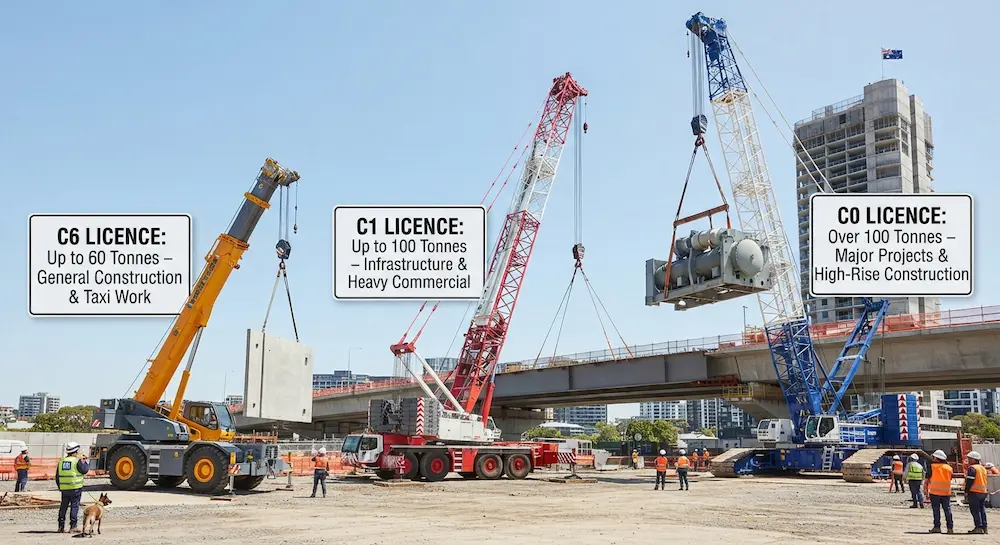
A slewing mobile crane operates differently from a non-slewing mobile crane because its boom or jib can rotate. The C6 Licence is associated with slewing mobile cranes up to 60 tonnes and may also encompass certain other crane licence classes under applicable rules.
To learn more about the differences and career opportunities associated with this type of equipment, read our guide to everything about C6 slewing mobile crane training.
Vehicle Loading Crane Training
Vehicle loading crane training is designed for people who operate cranes mounted on vehicles and who need to meet the requirements applicable to that type of equipment.
Bridge and Gantry Crane Training
Bridge and gantry crane courses focus on operating cranes that move along fixed runways or supporting structures. These cranes are commonly used in industrial and manufacturing environments.
Elevating Work Platform Training
Some workers also complete training for boom-type elevating work platforms. The licensing requirements depend on the type and reach of the equipment being operated.
What Jobs Can You Get with Non-Slewing Crane Training?
Completing non-slewing crane training can support employment in industries where mobile cranes are used to move and position materials. Potential job titles and work environments may include:
- Non-slewing mobile crane operator
- Mobile crane operator
- Construction plant operator
- Crane operator
- Transport and logistics operator
- Mining and resources equipment operator
- Civil construction plant operator
- Infrastructure project equipment operator
Job responsibilities and employment requirements vary. Employers may also require additional tickets, experience, site inductions and other qualifications depending on the industry and specific role.
How Much Can a Non-Slewing Crane Operator Earn?
Salary and wages for crane operators vary depending on experience, location, industry, employment arrangements and the type of equipment operated.
Some positions may offer hourly rates, while others are salaried or operate under enterprise agreements or industry-specific employment conditions. Operators working on large construction, infrastructure, mining or resources projects may have different pay structures from those working in general construction.
For this reason, there is no single salary figure that applies to every person who completes a non-slewing crane course. Experience, additional high risk work licences and specialised skills can all influence employment opportunities and earning potential.
Who Should Consider a Non-Slewing Crane Course?
A non-slewing crane course may be suitable for people who want to work with mobile cranes in construction, civil engineering, infrastructure, transport, mining or other industries where lifting operations are required.
It may also be relevant to experienced plant operators who want to expand their existing skills and obtain additional licensing for different types of equipment.
However, previous experience with another type of crane does not automatically mean that a person is competent to operate a non-slewing mobile crane. Each type of high risk work equipment has its own operating requirements and licensing rules.
Is TLILIC0018 Still the Current Course Code?
No. This is an important point for anyone searching online for the TLILIC0018 course. The national training register indicates that TLILIC0018 has been superseded by TLILIC0040.
Older websites, articles and course pages may still refer to TLILIC0018 because it was previously the relevant unit code. Before enrolling, students should check the current unit code, the training provider’s registration and the licensing requirements that apply in the state or territory where they plan to work.
Frequently Asked Questions About TLILIC0018 and Non-Slewing Crane Training
What does TLILIC0018 allow you to operate?
TLILIC0018 was the unit associated with operating a non-slewing mobile crane with a capacity greater than 3 tonnes. The unit has since been superseded by the current unit TLILIC0040.
Is TLILIC0018 still current in Australia?
TLILIC0018 is no longer the current unit code. It has been superseded by TLILIC0040 on the national training register. Always confirm the current course and licensing requirements before enrolling.
What is a CN crane licence?
CN is the High Risk Work Licence class associated with operating a non-slewing mobile crane with a capacity greater than 3 tonnes, subject to the applicable licensing requirements.
Do I need a licence to operate a non-slewing mobile crane?
For a non-slewing mobile crane with a capacity greater than 3 tonnes, the applicable High Risk Work Licence requirements generally apply. The exact application process should be confirmed with the relevant workplace health and safety regulator.
Can a C6 licence cover non-slewing mobile crane operation?
Some higher-level slewing mobile crane licence classes can encompass other crane licence classes under applicable rules. The exact conditions depend on the relevant jurisdiction and current licensing regulations.
Start Your Non-Slewing Crane Career with the Right Training
Non-slewing mobile crane operators play an important role in construction, infrastructure, transport, mining and other industries that rely on safe lifting operations. The right training helps operators develop the skills needed to plan tasks, assess hazards, understand crane capacity, communicate with other workers and operate equipment safely.
If you are searching for a TLILIC0018 non-slewing crane course, remember to check the current unit code and licensing requirements before booking. Because TLILIC0018 has been superseded by TLILIC0040, choosing a current and appropriately delivered course is an important step toward meeting Australia’s high risk work requirements.
With the right training, assessment and licensing pathway, non-slewing crane operation can provide opportunities across construction, civil infrastructure, transport, mining and other industries throughout Australia.