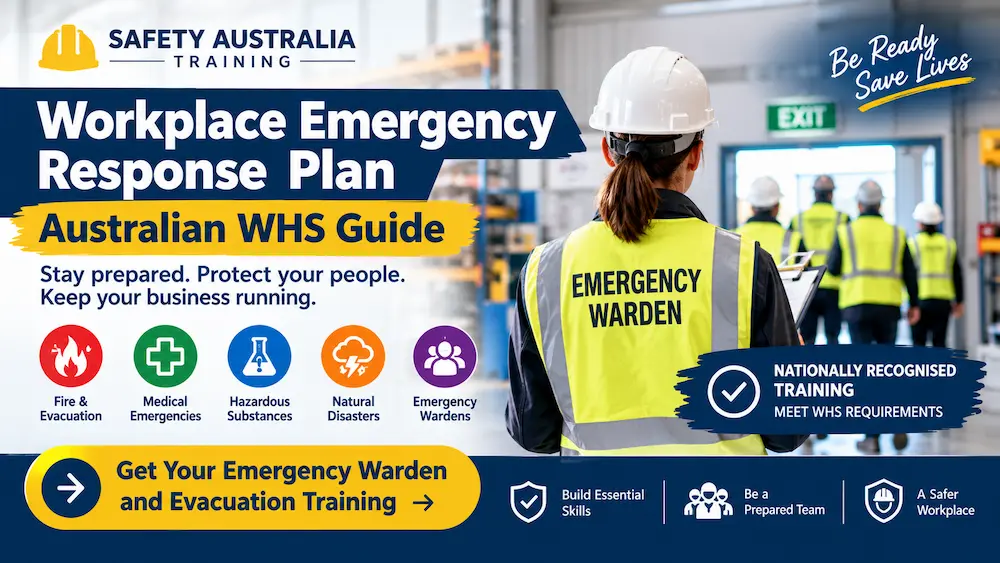
Every Australian workplace needs practical arrangements for responding to emergencies. A fire, chemical spill, medical incident, equipment failure or severe weather event can put workers and visitors at risk within minutes. A well-prepared workplace emergency response plan helps people understand what to do, where to go and who is responsible for coordinating the response.
Under Australia’s Work Health and Safety (WHS) framework, businesses must manage workplace risks and, where applicable, establish and maintain emergency plans and procedures. Effective arrangements should reflect the hazards, layout, workforce and operational requirements of the individual workplace.
This guide explains what an emergency response plan should include, how to prepare employees, the role of emergency wardens, common planning mistakes and practical ways to improve emergency preparedness.
Quick Answer: What Is a Workplace Emergency Response Plan?
A workplace emergency response plan is a documented set of instructions explaining how an organisation prepares for, responds to and recovers from emergencies. It typically identifies foreseeable emergencies, emergency contacts, evacuation routes, assembly areas, communication methods, responsible personnel and emergency equipment.
In Australia, businesses must meet the emergency planning and response duties applicable to their workplace under the relevant WHS legislation. Plans should be communicated to workers, tested where appropriate, and reviewed when circumstances change.
What Is an Emergency Response Plan?
An emergency response plan is a workplace document that outlines the actions people should take when an emergency occurs. It helps coordinate the response, reduce confusion and support the safe evacuation or protection of people at risk.
The plan should be tailored to the workplace rather than copied from a generic template without considering local hazards. An office, warehouse, construction site, healthcare facility and manufacturing plant may face very different emergency scenarios.
Depending on the workplace, an emergency plan may address:
- Fire, smoke and evacuation.
- Medical emergencies and serious injuries.
- Chemical spills, gas leaks and hazardous substance releases.
- Severe weather and other natural hazards.
- Electrical incidents and equipment failures.
- Emergency shutdowns and isolation of hazardous processes.
- Shelter-in-place arrangements where evacuation is unsafe or inappropriate.
The procedures must be suitable for the actual emergency. For example, a chemical release may require people to avoid a particular area, while a building fire may require evacuation through designated exits.
Why Is Emergency Response Planning Important?
Emergency planning helps organisations prepare for situations in which people may have little time to make decisions. Clear procedures and assigned responsibilities reduce uncertainty and help workers respond more safely.
An effective emergency response plan can help a business:
- Protect workers and visitors: Provide clear instructions for responding to foreseeable emergencies.
- Improve evacuation: Make exit routes, assembly areas and reporting arrangements easier to understand.
- Coordinate responsibilities: Identify who raises the alarm, assists with evacuation and communicates with emergency services.
- Support WHS compliance: Help the organisation meet applicable workplace health and safety duties.
- Reduce damage and disruption: Establish suitable procedures for protecting people, isolating hazards and managing recovery.
- Identify weaknesses: Use drills and reviews to find gaps before a real emergency occurs.
- Improve confidence: Give workers opportunities to understand and practise their emergency responsibilities.
Key point: Having an emergency plan on paper is not enough. Workers need to understand the procedures, know how to raise the alarm and be familiar with the actions expected of them.
What Should a Workplace Emergency Response Plan Include?
The required arrangements depend on the workplace and applicable legislation. The following elements provide a practical starting point for developing or reviewing a plan.
1. Emergency Procedures and Evacuation Routes
Workers should be able to identify what action to take when an emergency is discovered or an alarm sounds.
Include procedures covering:
- How to report an emergency and activate the alarm.
- Evacuation routes, emergency exits and alternative routes.
- Designated assembly or muster areas.
- Shelter-in-place procedures where appropriate.
- Emergency shutdown or isolation procedures for relevant equipment.
- Arrangements for accounting for workers, contractors and visitors.
- Instructions for contacting emergency services.
Emergency instructions should be easy to find, clearly written and accessible to the people who need to use them.
2. Communication and Emergency Alerts
Reliable communication is essential when people need to act quickly. The plan should explain how the emergency is reported, who activates the response and how instructions are communicated throughout the site.
Consider documenting:
- Who is authorised or responsible for raising the alarm.
- Alarm systems, public address announcements or other notification methods.
- Who contacts emergency services and provides relevant information.
- How visitors, contractors and people in isolated work areas are notified.
- Backup communication arrangements if the primary system fails.
Communication systems should be checked periodically, and workers should know what different alarms and announcements mean.
3. Emergency Equipment and Facilities
Emergency equipment should be appropriate for the hazards identified in the workplace. It should be accessible, maintained and inspected according to applicable requirements and manufacturer instructions.
| Equipment or Facility | Purpose |
|---|---|
| Fire extinguishers and fire blankets | Support suitable initial fire response where safe and appropriate. |
| First aid kits and AEDs | Support first aid and emergency medical response. |
| Alarms and communication devices | Alert people and coordinate emergency instructions. |
| Spill response equipment | Support appropriate response to relevant spills, when trained personnel can act safely. |
| Emergency lighting and exit signage | Help people identify exits and evacuation routes when normal lighting fails. |
Workers should know where emergency equipment is located and understand the limits of their training. No one should be expected to fight a fire, enter a hazardous area or perform a rescue beyond their competence and available safety controls.
4. Personal Protective Equipment (PPE)
Some workplaces require specific PPE for particular emergency duties. Depending on the hazards, this may include helmets, eye protection, chemical-resistant gloves, protective clothing, high-visibility clothing or suitable respiratory protection.
PPE selection must reflect the identified risks and the task being performed. It should not be treated as a substitute for eliminating hazards or implementing appropriate higher-level controls. Workers also need the training required to use the equipment safely.
5. Emergency Wardens and Response Responsibilities
An emergency plan should clearly identify who coordinates emergency actions and what each person is expected to do. Depending on the workplace, designated roles may include:
- Chief Warden: Coordinates designated emergency response activities in accordance with the site’s procedures.
- Area or Floor Wardens: Help implement evacuation procedures and communicate relevant information for their assigned areas.
- First Aid Officers: Provide first aid within their training and the workplace’s arrangements.
- Emergency Coordinators: Support communication, coordination and other responsibilities specified in the plan.
- Workers and contractors: Follow emergency instructions, raise alarms when necessary and report relevant hazards.
Role titles and structures vary between workplaces. The important point is that responsibilities are clearly assigned, understood and appropriate to the site’s needs.
Emergency wardens need more than a title. They require suitable preparation, communication skills and familiarity with the workplace’s procedures. Read our guide to 8 Critical Skills Every Emergency Warden Must Master to explore the capabilities that support effective emergency coordination.
Prepare Your Workplace Emergency Wardens
Give designated wardens the opportunity to develop their knowledge of emergency responsibilities and evacuation procedures.
6. Employee Training and Emergency Drills
Even well-designed emergency procedures can fail if workers do not understand them. Training and practice help employees recognise alarms, identify exit routes and respond appropriately to instructions.
Depending on the workplace, emergency preparation may include:
- Emergency induction for new workers.
- Information about alarm signals and emergency reporting.
- Evacuation exercises and familiarisation with assembly areas.
- Training for designated emergency wardens.
- Familiarisation with relevant emergency equipment.
- Practice of communication and accountability procedures.
Drills should be planned to suit the workplace and its risks. After an exercise, review what went well, identify problems and assign actions to improve the plan.
7. Workplace-Specific Hazards and Regulatory Requirements
Emergency procedures should reflect the hazards actually present. A generic plan may overlook risks associated with hazardous chemicals, confined spaces, work at heights, heavy machinery, electrical installations or remote work locations.
Businesses should identify the laws, regulations, Codes of Practice and other requirements relevant to their activities. The applicable WHS framework and any specific duties depend on the jurisdiction, industry and circumstances.
How to Create a Workplace Emergency Response Plan
Developing a useful plan involves more than filling in a template. The process should connect the workplace’s risk assessment with practical emergency procedures and clear responsibilities.
- Identify foreseeable emergencies. Review the workplace, activities, equipment, substances and surrounding environment to determine credible emergency scenarios.
- Assess the risks. Consider who could be affected, how an incident might develop and what controls are needed.
- Document the procedures. Specify how to raise the alarm, evacuate or shelter, contact emergency services and manage relevant hazards.
- Assign responsibilities. Designate suitable wardens and other personnel, and explain the limits of their roles.
- Identify equipment and resources. Check that appropriate emergency equipment, communication systems and exit arrangements are available.
- Communicate the plan. Make sure workers, contractors and relevant visitors receive the information they need.
- Practise the procedures. Use suitable drills or exercises to test whether people understand what to do.
- Review and improve. Correct weaknesses and update the arrangements when hazards, operations or workplace conditions change.
Common Emergency Response Planning Mistakes
Emergency plans can become ineffective when they are outdated, difficult to understand or disconnected from day-to-day workplace conditions. Common problems include the following.
Poor Employee Training
Workers who have never practised emergency procedures may hesitate, misunderstand instructions or use the wrong exit. Provide suitable induction and refresher activities based on the workplace’s needs.
Unclear Communication
Workers need to know how to report an emergency, recognise alarms, receive instructions and contact the appropriate personnel. Conflicting messages can create confusion during an incident.
Outdated Procedures
Renovations, new equipment, changes in staffing and altered work processes can make existing procedures unsuitable. Review the plan when changes affect emergency risks or arrangements.
Ignoring Workplace-Specific Hazards
A warehouse may need to address vehicle movements and stored materials, while a manufacturing site may have hazardous processes or substances. Emergency arrangements should reflect these differences.
Overlooking People Who Need Assistance
Consider how the plan will account for people who may need additional assistance, including people with disabilities, injured workers, visitors, contractors and people unfamiliar with the building.
Failing to Test the Plan
A procedure that appears clear on paper may not work in practice. Suitable exercises can reveal blocked routes, unclear responsibilities, alarm problems or gaps in communication.
How Often Should an Emergency Response Plan Be Reviewed?
An emergency response plan should be reviewed often enough to remain suitable for the workplace’s risks and operating conditions. The required review and testing arrangements depend on the applicable legislation and the circumstances of the business.
A formal review at least annually can be a useful management practice, but it should not be treated as a universal statutory deadline for every workplace. Additional reviews may be necessary whenever significant changes occur.
Review the plan when:
- The building layout, access routes or exit arrangements change.
- New equipment, machinery or hazardous substances are introduced.
- Work activities or operating hours change.
- Emergency wardens or other responsible personnel change.
- A drill reveals problems or unexpected delays.
- An actual emergency identifies weaknesses in the procedures.
- Relevant legal requirements or workplace risks change.
Keep records of reviews, exercises, identified issues and corrective actions where appropriate. This helps the organisation track improvements and confirm that problems have been addressed.
Emergency Response Planning in High-Risk Industries
Some workplaces require more specialised emergency procedures because of their activities, equipment or environment. These arrangements should be developed around the relevant risks and any specific regulatory requirements.
| Workplace or Industry | Potential Emergency Planning Considerations |
|---|---|
| Construction | Falls, structural incidents, plant movements and access for emergency services. |
| Manufacturing | Machinery incidents, hazardous substances, fire and emergency shutdowns. |
| Warehousing and logistics | Vehicle movements, storage areas, fire risks and evacuation access. |
| Mining and resources | Remote locations, hazardous environments, communication and specialist response arrangements. |
| Confined space and work-at-height activities | Task-specific rescue planning, specialist equipment and appropriately trained personnel. |
Workers involved in high-risk tasks may need training that goes beyond general evacuation procedures. Depending on their role and the work being performed, relevant preparation may include working-at-height safety or emergency rescue skills.
Read more about the Importance and Benefits of the WAH and Emergency Rescue Course to understand why task-specific preparation matters in higher-risk work environments.
Workplace Emergency Response Plan Checklist
Use this checklist as a starting point when reviewing your workplace arrangements. It does not replace a risk assessment or the need to check applicable legal requirements.
- Foreseeable emergency scenarios have been identified.
- Emergency reporting and alarm procedures are documented.
- Evacuation routes and assembly areas are identified.
- Emergency roles and responsibilities are assigned.
- Workers know how to contact emergency services.
- Emergency equipment is appropriate and maintained.
- Visitors, contractors and people needing additional assistance are considered.
- Workers receive suitable emergency information and training.
- Emergency drills or exercises are conducted as appropriate.
- Reviews, identified problems and corrective actions are recorded where appropriate.
Frequently Asked Questions About Workplace Emergency Response Plans
1. What is the purpose of a workplace emergency response plan?
Its purpose is to explain how a workplace prepares for and responds to emergencies. It identifies procedures, responsibilities, communication methods, evacuation arrangements and other measures intended to protect people and manage foreseeable risks.
2. Are emergency response plans required in Australian workplaces?
Australian WHS laws include duties relating to emergency planning and response. The specific requirements depend on the applicable legislation and workplace circumstances. Businesses should consult the relevant state or territory regulator and applicable Codes of Practice.
3. What should an emergency response plan contain?
It commonly covers foreseeable emergencies, alarm and reporting procedures, evacuation routes, assembly areas, emergency contacts, assigned responsibilities, equipment, training and arrangements for reviewing the plan.
4. Who is responsible for workplace emergency planning?
Responsibility depends on the applicable legal framework and workplace arrangements. Employers and other relevant duty holders must meet their legal obligations. Designated wardens and workers then carry out the responsibilities assigned to them under the workplace plan.
5. How often should emergency evacuation drills be conducted?
The appropriate frequency depends on the workplace’s risks, operations and applicable requirements. Businesses should establish a suitable schedule, ensure workers understand the procedures and use exercises to identify and correct weaknesses.
6. Does every workplace need an emergency warden?
The personnel and roles required depend on the workplace’s size, layout, risks and applicable requirements. Designating and training suitable emergency wardens can help many workplaces coordinate evacuation and communication effectively.
7. When should an emergency response plan be updated?
Review the plan when workplace risks, layouts, equipment, operations or responsible personnel change. It should also be reviewed when drills or actual incidents reveal weaknesses, and at other intervals required by applicable arrangements.
8. What is the difference between an emergency response plan and an evacuation plan?
An evacuation plan focuses on moving people safely away from a hazard or building. An emergency response plan is broader and may also cover incident reporting, shelter-in-place procedures, emergency shutdowns, communication, emergency services and recovery arrangements.
Prepare Your Workplace with Emergency Warden and Evacuation Training
1. What is the purpose of a workplace emergency response plan?
Its purpose is to explain how a workplace prepares for and responds to emergencies. It identifies procedures, responsibilities, communication methods, evacuation arrangements and other measures intended to protect people and manage foreseeable risks.
2. Are emergency response plans required in Australian workplaces?
Australian WHS laws include duties relating to emergency planning and response. The specific requirements depend on the applicable legislation and workplace circumstances. Businesses should consult the relevant state or territory regulator and applicable Codes of Practice.
3. What should an emergency response plan contain?
It commonly covers foreseeable emergencies, alarm and reporting procedures, evacuation routes, assembly areas, emergency contacts, assigned responsibilities, equipment, training and arrangements for reviewing the plan.
4. Who is responsible for workplace emergency planning?
Responsibility depends on the applicable legal framework and workplace arrangements. Employers and other relevant duty holders must meet their legal obligations. Designated wardens and workers then carry out the responsibilities assigned to them under the workplace plan.
5. How often should emergency evacuation drills be conducted?
The appropriate frequency depends on the workplace’s risks, operations and applicable requirements. Businesses should establish a suitable schedule, ensure workers understand the procedures and use exercises to identify and correct weaknesses.
6. Does every workplace need an emergency warden?
The personnel and roles required depend on the workplace’s size, layout, risks and applicable requirements. Designating and training suitable emergency wardens can help many workplaces coordinate evacuation and communication effectively.
7. When should an emergency response plan be updated?
Review the plan when workplace risks, layouts, equipment, operations or responsible personnel change. It should also be reviewed when drills or actual incidents reveal weaknesses, and at other intervals required by applicable arrangements.
8. What is the difference between an emergency response plan and an evacuation plan?
An evacuation plan focuses on moving people safely away from a hazard or building. An emergency response plan is broader and may also cover incident reporting, shelter-in-place procedures, emergency shutdowns, communication, emergency services and recovery arrangements.
An effective workplace emergency response plan combines clear procedures, suitable equipment, trained personnel and regular review. When workers understand their responsibilities and practise the required actions, an organisation is better prepared to respond to emergencies and identify weaknesses in its arrangements.
For businesses looking to strengthen emergency preparedness, training designated wardens is an important step towards helping staff understand emergency responsibilities and evacuation procedures.
Help Your Team Prepare for Workplace Emergencies
Explore Safety Australia Training’s Emergency Warden and Evacuation Training and review the course information for your organisation’s needs.