Confined spaces remain one of the highest-risk work environments across Australian industries. Despite strong regulatory frameworks and increased awareness, incidents involving confined spaces continue to result in serious injuries and fatalities each year. As we move into 2026, the challenge is no longer simply identifying confined spaces, but understanding the specific hazards they present and applying effective control measures consistently.
This guide explores the most common confined space hazards encountered in workplaces today and explains how they can be controlled through planning, training, and compliance with Australian Work Health and Safety (WHS) requirements.
Understanding Confined Spaces in the Australian Workplace
A confined space is defined under Australian WHS legislation as an enclosed or partially enclosed area that is not designed for continuous human occupancy and has restricted entry or exit. These spaces may contain hazardous atmospheres, dangerous substances, or conditions that pose a serious risk to health and safety.
Common examples include tanks, silos, pits, pipes, sewers, tunnels, boilers, and storage vessels. While these environments vary significantly, they share one common feature: conditions can change rapidly and without warning.
Safe work in these environments requires more than basic awareness. It demands structured procedures, trained personnel, and a clear understanding of hazards and controls.
Detailed guidance on safe entry systems can be found in this confined space entry training and procedures resource:
https://safetyaustraliatraining.com.au/confined-space-entry-training-and-procedures-for-safe-work/
1. Hazardous Atmospheres
Why Hazardous Atmospheres Are Dangerous
Atmospheric hazards are the leading cause of confined space fatalities. Oxygen deficiency, oxygen enrichment, toxic gases, and flammable vapours can all exist in confined spaces, often without visible warning signs.
Oxygen levels below 19.5 percent can impair coordination, cause unconsciousness, and lead to death. Toxic gases such as carbon monoxide, hydrogen sulfide, or chemical vapours may accumulate due to poor ventilation. In some environments, flammable atmospheres can ignite from static electricity or equipment use.
How to Control Atmospheric Hazards
Effective control begins with atmospheric testing before any entry occurs. Testing must also continue while work is being carried out, as conditions can change unexpectedly. Ventilation systems should be used to introduce fresh air and remove contaminants, but ventilation alone must never replace testing.
Workers should be trained to understand gas detection equipment, alarm thresholds, and emergency response procedures. Importantly, no confined space should be entered if atmospheric conditions are unsafe.
2. Engulfment Hazards
Why Engulfment Is a Serious Risk
Engulfment occurs when a worker is surrounded or buried by liquids or free-flowing solids such as grain, sand, sludge, or soil. These materials can shift suddenly, trapping workers and restricting breathing.
Even materials that appear stable can collapse or flow when disturbed. In many incidents, workers are unable to free themselves or call for help.
How to Control Engulfment Hazards
Control measures include isolating and locking out all systems that could introduce material into the confined space. Tanks, silos, and pipes should be emptied, cleaned, and verified as safe before entry.
Physical barriers, such as baffles or supports, may be required to prevent movement of materials. Permit systems and pre-entry risk assessments are essential for identifying engulfment risks before work begins.
3. Restricted Entry and Exit
Why Limited Access Increases Risk
Confined spaces often have narrow openings or limited access points, making entry and exit difficult. In an emergency, this restriction can delay rescue efforts and increase the severity of injuries.
Many fatalities occur when untrained workers attempt to rescue a colleague without proper equipment or planning.
How to Control Access and Egress Hazards
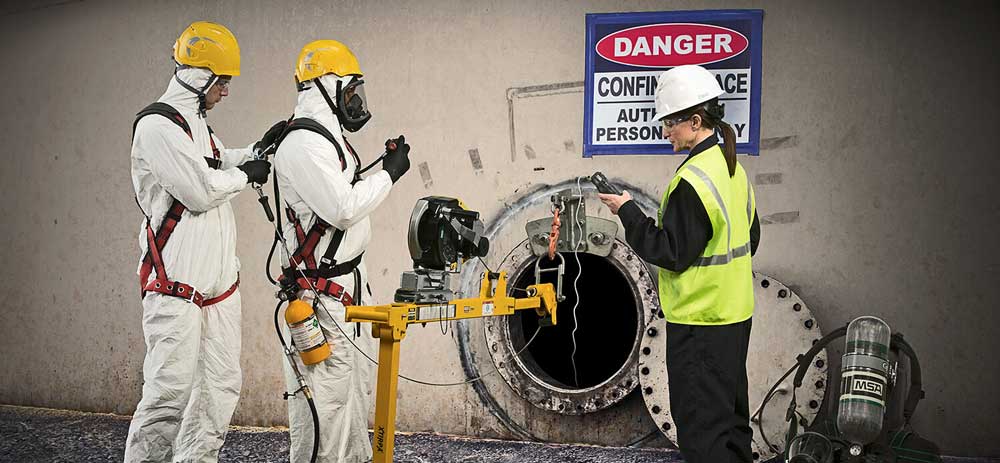
Clear access routes must be established and kept unobstructed at all times. Retrieval systems such as tripods, winches, and harnesses should be used where appropriate. Standby personnel must be present outside the confined space to monitor conditions and initiate emergency procedures.
Rescue planning is a legal requirement, not an optional precaution. Rescue procedures must be documented, practiced, and supported with suitable equipment and trained personnel.
4. Mechanical and Electrical Hazards
Why These Hazards Are Often Overlooked
Mechanical and electrical hazards are frequently underestimated in confined spaces. Moving machinery, pressurised systems, or live electrical components can cause crushing injuries, entanglement, or electrocution.
Unexpected activation of equipment during confined space work has led to many serious incidents.
How to Control Mechanical and Electrical Risks
All energy sources must be isolated before entry using lockout and tagout procedures. Isolation should be verified and documented as part of the entry permit process.
Only intrinsically safe tools and equipment should be used where there is a risk of flammable atmospheres. Workers must be trained to recognise and control energy hazards specific to confined environments.
5. Heat Stress and Environmental Conditions
Why Heat Stress Is a Major Concern
Confined spaces often have poor airflow and elevated temperatures. When combined with physical exertion and personal protective equipment, workers can quickly experience heat exhaustion or heat stroke.
High humidity can further reduce the body’s ability to cool itself, increasing risk.
How to Control Heat-Related Hazards
Environmental conditions should be monitored throughout the task. Work-rest schedules, hydration, and ventilation are critical control measures. In some cases, work may need to be rescheduled to cooler periods or stopped altogether if conditions become unsafe.
6. Psychological and Human Factors
Why Human Factors Matter
Confined spaces can cause anxiety, stress, and claustrophobia, affecting concentration and decision-making. Fatigue and poor communication can further increase risk.
Human factors are often underestimated but play a significant role in confined space incidents.
How to Control Human-Related Risks
Workers must be physically and mentally fit for confined space work. Clear communication systems should be established, including emergency signals and procedures.
Regular training ensures workers understand their roles and responsibilities, reducing hesitation and confusion during critical situations.
The Importance of Training and Procedures
Confined space hazards are well known and largely preventable when appropriate controls are applied. However, equipment alone is not enough. Competency, training, and clear procedures are the foundation of safe confined space work.
Structured training programs ensure workers understand hazard identification, permit systems, atmospheric testing, and emergency response. Comprehensive procedures, such as those outlined in confined space entry training and procedures for safe work, provide a framework for consistent and compliant operations.
Final Thoughts
Confined spaces will always present elevated risk, but that risk can be effectively managed. In 2026, best practice means thorough planning, ongoing monitoring, and continuous training.
By understanding common confined space hazards and implementing layered control measures, organisations can protect workers, meet legal obligations, and prevent avoidable incidents.
Safety in confined spaces is not about reacting to emergencies—it is about preventing them before they occur.