Working at height can be a rewarding career choice in Australia, particularly for skilled operators with the right qualifications. An EWP (Elevating Work Platform) licence can open the door to employment across construction, maintenance, electrical work, telecommunications, mining, infrastructure and other industries where elevated work platforms are regularly used.
Whether you are considering an EWP licence for the first time or looking to expand your existing qualifications, understanding the available training, licensing requirements and career opportunities can help you make the right decision.
Why Get an EWP Licence in Australia?
Obtaining the appropriate EWP licence can provide valuable skills and improve your employment opportunities. Depending on the type of EWP you operate, different training and licensing requirements may apply.
- Strong employment demand: EWP operators are required across construction, electrical, maintenance, signage installation, telecommunications and infrastructure projects.
- Competitive earning potential: Qualified and experienced EWP operators can access a range of skilled positions with competitive wages.
- More career opportunities: EWP training can allow you to work with equipment such as boom lifts and other elevated work platforms, depending on your qualification.
- Transferable skills: Safe equipment operation, hazard identification and workplace safety knowledge are valuable across multiple industries.
- Career progression: EWP experience can complement additional high-risk work licences and other construction qualifications, helping you progress into more specialised roles.
EWP Licence Requirements in Australia
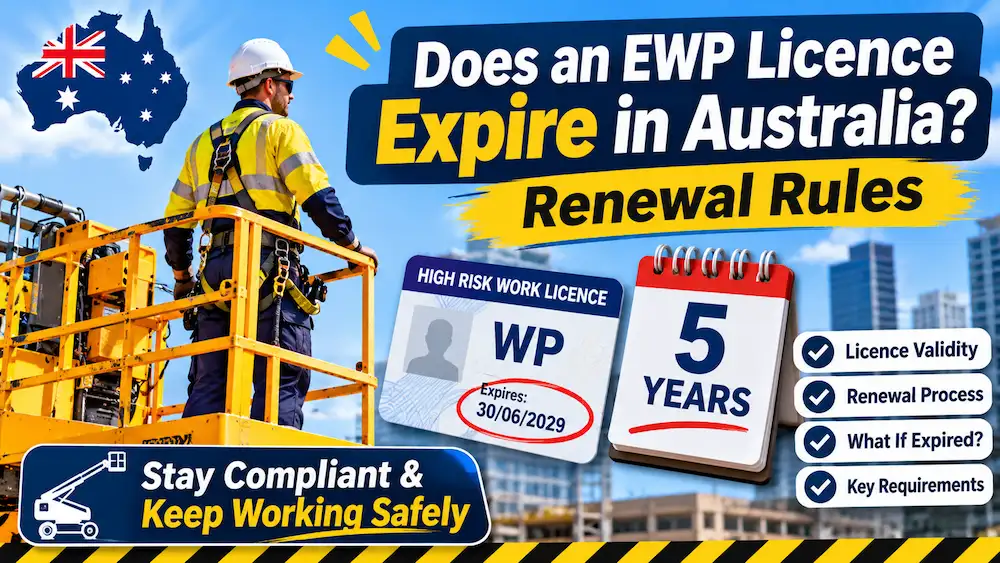
One of the most important things to understand before enrolling in an EWP course is that the requirements can vary depending on the equipment you intend to operate. In Australia, certain high-risk work involving boom-type elevated work platforms requires the appropriate high-risk work licence.
If you are unsure which qualification applies to your situation, it is important to understand the difference between EWP categories and the relevant licensing requirements before booking your training.
For a more detailed explanation, read our guide to EWP licence requirements in Australia, including what you need to know before starting your training.
What Skills Do You Learn During EWP Training?
EWP training is about much more than simply learning how to move a machine. Proper training helps operators understand how to use elevated work platforms safely and identify potential hazards before and during operation.
Safe EWP Operation
Training covers the correct operation of the relevant elevated work platform, including controls, operating procedures, equipment limitations and safe positioning.
Hazard Identification and Workplace Safety
Working at height presents specific risks. Operators need to understand hazards such as overhead power lines, uneven ground, nearby structures, falling objects and changing workplace conditions.
Pre-Start Inspections and Equipment Checks
Operators are taught the importance of inspecting equipment before use and identifying defects or issues that could affect safe operation.
Safe Movement and Load Handling
Depending on the equipment and training category, operators develop skills in manoeuvring the platform, positioning it correctly and working within the manufacturer’s specified operating limitations.
EWP Over 11 Metres vs Under 11 Metres
The height and type of EWP you intend to operate can make a significant difference to the qualification you need. Understanding the distinction between EWP equipment operating below and above 11 metres is therefore important when choosing a training course.
For people who want broader EWP skills, a combined training option may be worth considering. Our guide to the EWP over and under 11 metres combo package explains how this type of training can help operators develop skills across both categories.
What Jobs Can You Get With an EWP Licence?
An EWP qualification can be useful in a variety of industries. Depending on your licence, experience and additional qualifications, potential roles may include:
- EWP or boom lift operator
- Construction and building maintenance worker
- Electrical and utility worker
- Signage installation worker
- Telecommunications worker
- Industrial maintenance worker
- Infrastructure and civil construction worker
- Event and temporary structure installation worker
Having an EWP licence can also be particularly valuable when combined with other relevant construction, electrical, rigging, dogging or safety qualifications.
How to Get an EWP Licence in Australia
The process starts by identifying the type of elevated work platform you need to operate and determining which training and licensing requirements apply. You can then enrol with an appropriate training provider and complete the required theory and practical training.
During training, you will learn about the safe operation of the equipment, workplace hazards, pre-start checks and relevant operating procedures. You will then need to successfully complete the required assessment to demonstrate that you can operate the equipment safely and competently.
Is an EWP Licence Worth It?
For people looking to build a career in construction, maintenance, infrastructure or other industries involving elevated work, an EWP qualification can be a valuable investment. It provides practical equipment-operation skills while potentially increasing the range of jobs you can apply for.
However, the right licence depends on the type of EWP and the work you plan to perform. Taking the time to understand the requirements before enrolling can help ensure you choose training that matches your career goals.
Start Your EWP Training Journey
An EWP licence can help you develop practical skills, improve your employability and access a wider range of opportunities across Australia’s construction and industrial sectors. From construction sites and maintenance projects to electrical, telecommunications and infrastructure work, trained EWP operators can play an important role wherever elevated access is required.
If you’re ready to take the next step, research the EWP training options available to you and choose a course that matches the equipment and type of work you want to perform. With the right training and experience, you can build a safer, more skilled and rewarding career working at height.